A ghost in the manuscript
Hachette cancels horror novel “Shy Girl” after widespread allegations of AI use
Foto/Video: Youtube, frankie's shelf
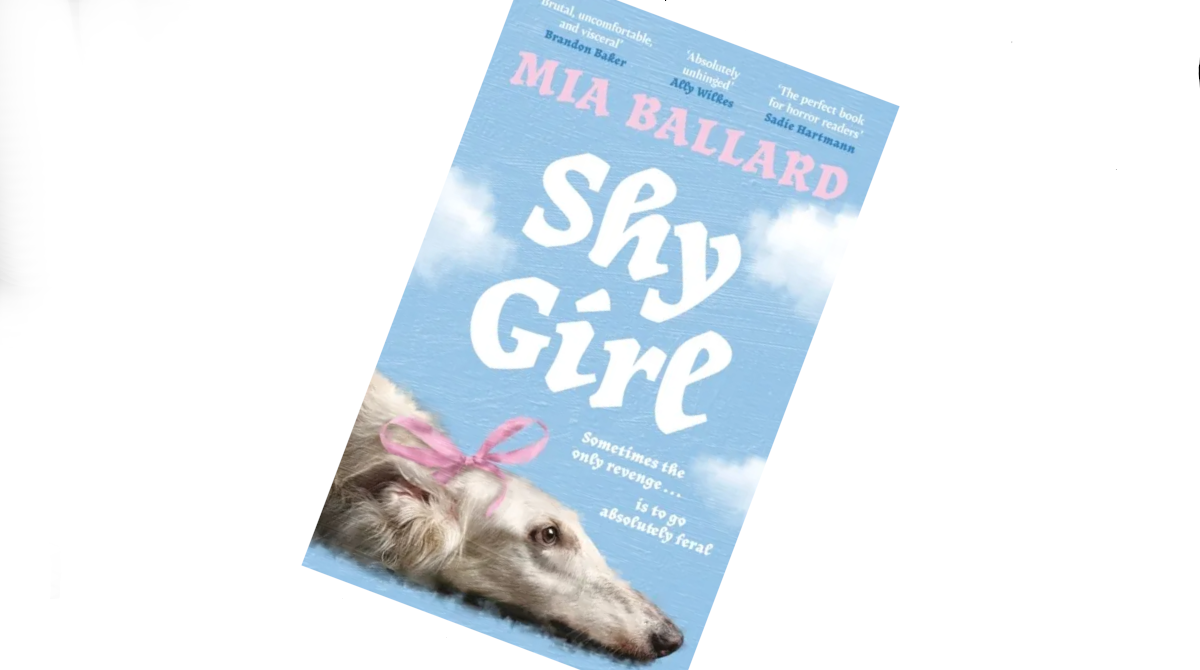
Hachette Book Group, one of the largest publishers in the United States, has pulled the horror novel Shy Girl from publication — a decision the New York Times described as appearing to be the first time a commercial novel from a major publishing house has been withdrawn over evidence of AI use. The move follows an internal review and widespread online allegations that the book’s author, Mia Ballard, relied heavily on artificial intelligence to generate the text.
The cancellation affects both sides of the Atlantic: Hachette’s Orbit imprint has scrapped the planned U.S. release, while the UK edition, published last November under the Wildfire imprint, has been discontinued and removed from retailers including Amazon.
Update: Apparently our colleague Thad McIlroy brought the scoop to the NY Times. Read more.
From self-published sensation to controversy
Shy Girl initially gained traction through the modern self-publishing pipeline. Originally published by Ballard herself in February 2025, the novel — about a woman who agrees to live as a man’s “pet” in exchange for having her debts erased — was promoted as a “buzzy BookTok sensation” and accumulated nearly 5,000 ratings on Goodreads, averaging around 3.5 stars. The UK commercial edition sold approximately 1,800 print copies, according to NielsenIQ BookData.
The backlash took hold in early 2026, as readers began flagging what they suspected was machine-generated prose. Key flashpoints included:
Repetitive phrasing and generic metaphors flagged by Goodreads reviewers, with one writing: “Pretty sure this was A.I. generated.”
A YouTube video titled “i’m pretty sure this book is ai slop” that amassed over 1.2 million views, systematically analysing the book’s language.
A widely shared Reddit thread in which many commenters alleged that the prose bore hallmarks of AI-generated output, including bizarre formatting and repetitive turns of phrase.
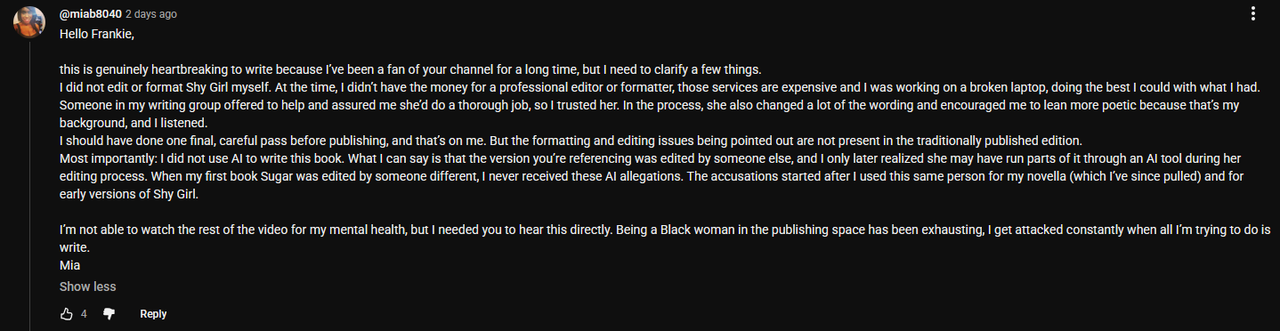
Mia Ballard herself commented on the video after it quickly got a ton of traction.
Ballard denies personal use, blames an editor
As scrutiny intensified, Hachette conducted what it described as a thorough and lengthy review of the text. According to reporting by Jane Friedman, the publisher only moved to cancel after the New York Times contacted Hachette directly and presented evidence of AI use.
Ballard herself denied having personally used AI to write the book. In an email to the New York Times, she stated that an acquaintance she had hired to edit the original self-published version had used AI tools, and that she was pursuing legal action.
“This controversy has changed my life in many ways and my mental health is at an all time low and my name is ruined for something I didn’t even personally do.”
Publishing industry observers have noted that authors bear ultimate responsibility for the manuscripts they submit. In a newsletter post discussing the case, author and critic Lincoln Michel wrote: “Authors: Read your book before you publish it. You are responsible for edits you accept.”

Mia Ballard, as per her Amazon profile. "Mia Ballard is of African American and Native American heritage and has been writing since she was just ten years old. Passionate about true crime and horror, she loves writing stories about unhinged women, and women's issues. She currently writes and resides in California with her partner and adorably anxious springer Spaniel.“
A growing challenge for the industry
The Shy Girl case highlights a structural vulnerability for traditional publishers who increasingly draw on the self-publishing market as a pipeline for commercial talent, particularly in genre fiction. While Hachette states that it requires all submissions to be original to the author and asks authors to disclose AI use during the writing process, the incident demonstrates the difficulty of identifying AI-generated content reliably before publication.
On Substack the author Lincoln Michael writes: "Shy Girl sold copies and tricked at least some readers. Does this mean LLMs can write artistically now or compete with great or even just good authors? I wouldn’t go that far. The book seems bad. Sloppy. But we must acknowledge that lots of human slop sells too. Perhaps we can say that LLM slop has achieved human slop levels." And: "In general, agents and editors may need to pay attention (if they are not already) to how LLMs are developing and what tics and tells LLM text displays."
Mark Williams asks the "uncomfortable question“ about Hachette’s acquisition process. "Did anyone there actually read the manuscript with critical attention? Or did the self-publishing sales figures do the reading for them?"
Several industry bodies are now developing tools to address the problem:
Society of Authors (UK): Launched a logo scheme (March 2026) enabling authors to register works and signal human authorship on their books — described as the first such initiative from a UK trade association.
Authors Guild (US): Introduced a similar human-authored registration initiative in early 2025.
As Shy Girl is withdrawn from sale, the case stands as a marker of the publishing industry’s ongoing struggle to define and enforce originality standards in an era of widely accessible generative AI tools.