The battle for the european shelf
PRH UK and Bonnier clash over the future of English-language rights
In a wide-ranging keynote at the 2026 London Book Fair (LBF), Penguin Random House UK CEO Tom Weldon set a defiant tone for the industry’s future. Speaking with The Bookseller editor Philip Jones, Weldon addressed the fracturing of traditional rights territories, the encroachment of AI, and the escalating costs of a global economy destabilized by conflict in the Middle East.

photo: LBF, PRH
The session (read more at Publishing Perspectives) provided a roadmap of where the world’s largest trade publisher is drawing its "red lines" to protect the value of the book ecosystem.

Bonnie Garmus (© photo: Moya Nolan)
Territorial integrity faces a "race to the bottom"
The most significant industry-shaking revelation involved the loss of bestselling author Bonnie Garmus ("Lessons in Chemistry") to Bonnier Books UK. Weldon clarified that PRH didn't "lose" Garmus, but rather "decided to lose her" over a fundamental disagreement on English-language rights in Europe.
The dispute: Garmus’s new deal allows Piper (Bonnier Media Germany) to publish her second novel, "Peck & Peck", in both German and English across Europe.
The threat: Weldon warned that selling English-language rights to European publishers creates a "very dangerous situation." Because Europe is an open market, he argues this leads to:
Price erosion: A "race to the bottom" on retail pricing.
Stock chaos: Unsold European stock bleeding into UK and US markets via global online platforms.
Market confusion: Diluting the brand for both retailers and readers.
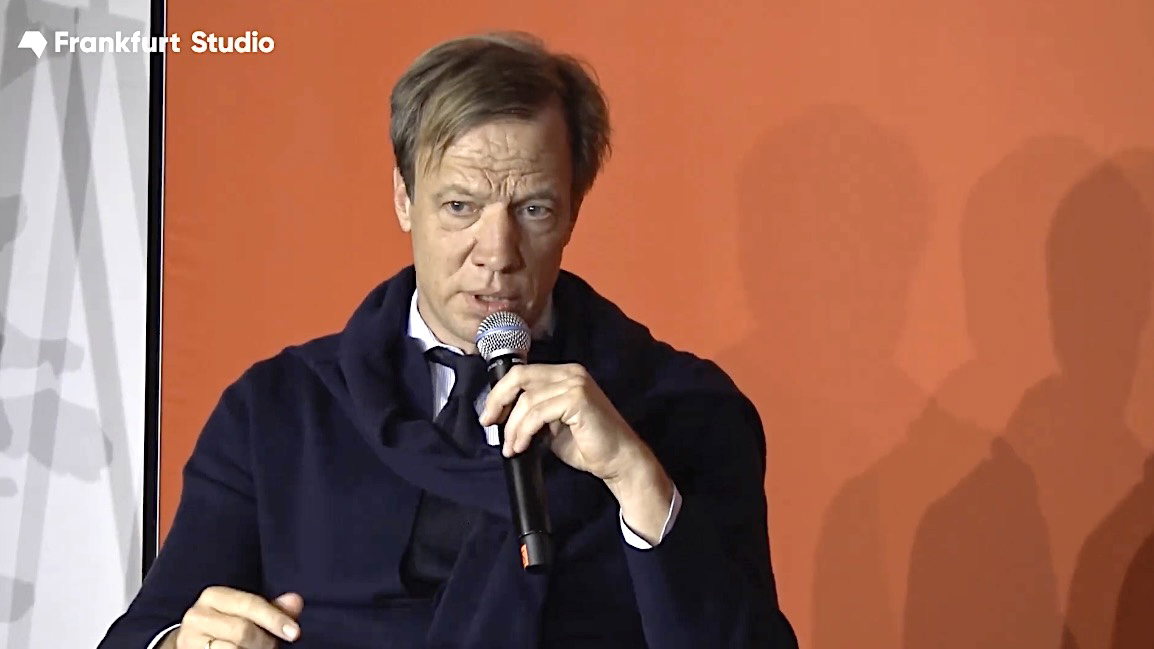
Christian Schumacher-Gebler at Frankfurt Book Fair 2025 (watch the video here)
The European perspective: This "red line" is a direct response to a growing movement led by figures like Christian Schumacher-Gebler, CEO of Bonnier Germany. Speaking at the Frankfurt Book Fair 2025, Schumacher-Gebler argued that the current model is "destroying markets." (read more in our channel) He specifically targeted the UK practice of shipping "super cheap, super crappy" paperback editions into Europe parallel to high-priced domestic hardcovers, undercutting local publishers who bear the heavy costs of translation and local marketing. While Weldon sees a "race to the bottom," Schumacher-Gebler views the acquisition of English-language rights by European houses as a survival necessity to protect the local ecosystem and ensure fairer royalty distribution.
The policy: PRH UK will no longer contract with agents who sell English-language rights to European publishers—a firm "red line" intended to protect the broader ecosystem.
AI strategy moves from "theft" to selective innovation
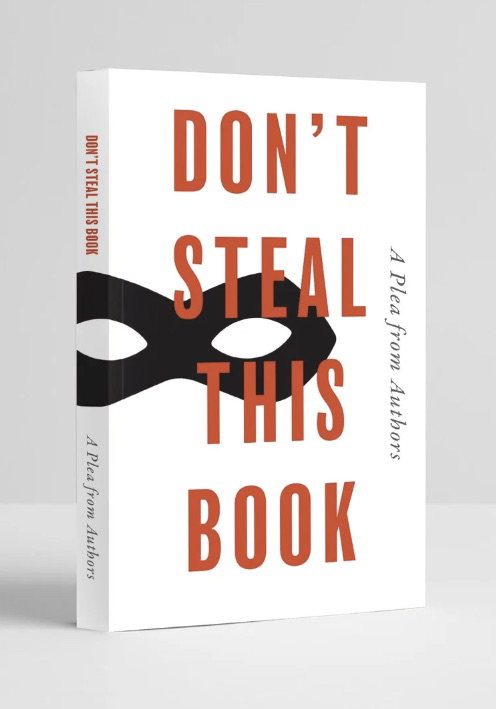
Weldon used the fair to highlight the "Don’t Steal This Book" initiative—a symbolic volume containing the names of 10,000 authors protesting the UK government’s proposed copyright exceptions.
Human-first mandate: Weldon emphasized that PRH "champions human creativity" and refuses to use AI for translation or audiobook narration in major markets like English, German, or Spanish.
The opportunity: He signaled a pragmatism regarding "repetitive processes" and underserved markets. For instance, he noted that while there are 300 million Arabic speakers, only 7,000 audiobooks are available. AI could bridge this gap in "long-tail" languages where human production isn't currently viable.
The demand: Transparency, consent, and compensation. Weldon insisted that the industry must utilize existing licensing frameworks rather than allowing "Big Tech" to scrape content for free.
Geopolitics trigger an "oil-led" economic crisis
With the ongoing conflict in the Middle East—specifically the war in Iran—Weldon warned of a looming supply chain crunch.
Freight pressure: Dramatic spikes in oil prices are driving up freight costs.
US vs. UK: While a burden for the UK, Weldon noted this is "really bad news" for American publishers due to the massive geographical scale of US distribution networks.
Cultural neutrality and editorial standards remain non-negotiable
Addressing internal and external pressures on publishing "politics," Weldon doubled down on the legacy of Penguin founder Allen Lane: "A publisher has no politics."
Plurality of viewpoint: He defended the publication of polarizing figures (e.g., Jordan Peterson vs. Naomi Klein), stating that employees who cannot work on books they personally disagree with "shouldn't be here."
DEI progress: Despite a wider political backlash against Diversity, Equity, and Inclusion, Weldon maintained that PRH is committed to a "sustainable talent pipeline," noting that entry-level staff and new author signings now reflect national demographics.
The final verdict: The merchant of ideas
Weldon concluded by positioning book publishing as a vital counterweight to the decline of traditional media. Whether defending territorial rights or resisting the unauthorized scraping of content by Big Tech, the message from LBF 2026 was clear: Citing titles like Alexei Navalny’s "Patriot", Virginia Giuffre's "Nobody's Girl", and Gisèle Pelicot's "A Hymn to Life", he argued that the role of the publisher as a "merchant of ideas" is more critical than ever.
"When the rest of traditional media is disappearing... the role of book publishing has never been more important." — Tom Weldon