Major publishers seek to join landmark copyright lawsuit against Google’s Gemini AI
Publishers escalate the legal battle against Google
The legal battle over generative artificial intelligence has escalated as two of the world’s leading publishing houses move to join a major class-action lawsuit against Google. Hachette Book Group and educational giant Cengage have filed to intervene in the case, accusing the tech titan of "one of the most prolific infringements of copyrighted materials in history."

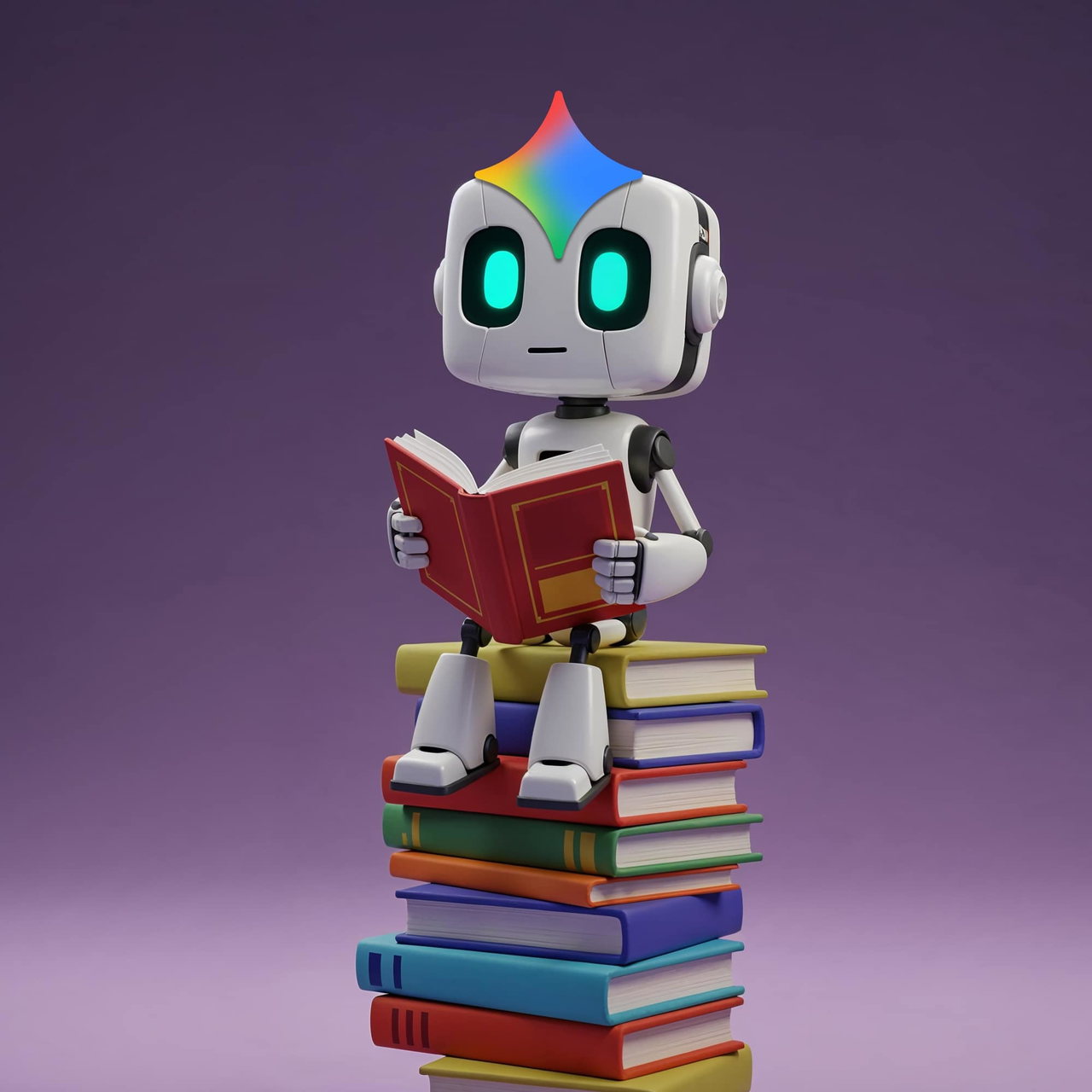
Photo/video: Pixelmator, AI-generated
The lawsuit, currently before Judge Eumi K. Lee in the U.S. District Court for the Northern District of California, was originally launched in 2023 by a group of individual writers and illustrators. By joining the suit, the publishers—backed by the Association of American Publishers (AAP)—aim to represent the broader industry and provide the legal and evidentiary "expertise" necessary to hold AI developers accountable.
The push for publisher intervention is heavily informed by the recent outcome of the Bartz v. Anthropic class action. In that case, Judge William Alsup delivered a landmark split decision: while the court found that training AI on legally acquired books was "transformative" fair use, it ruled that the storage of millions of books from pirated "shadow libraries" like LibGen was not.
This led to a historic $1.5 billion settlement in late 2025, the largest in copyright history, which established a 50/50 split of damages between authors and publishers. The AAP and its members now cite the success of the Bartz case as proof that direct publisher involvement is essential to navigate the complex rights and data questions currently facing the court in the Google litigation.
At the heart of the complaint is Google’s generative AI product, Gemini. The plaintiffs allege that Google illegally copied millions of books to train the large language model rather than securing licensing deals with copyright owners.
According to the complaint, Gemini does more than just learn from these texts; it actively competes with them. The filing alleges that the AI can produce "verbatim and near-verbatim" copies of copyrighted works, generate replacement chapters for academic textbooks, and create 100-page novels in minutes for a fraction of the cost of a human-authored book.
“No publisher or author can compete with that,” the complaint states, noting that the market is already being flooded with "AI-generated substitutes" built on the backs of stolen creative labor.
Industry unity
The move to intervene comes as Google has attempted to block publishers from the class action, citing "intra-class complexities." However, the AAP points to the recent success of the Bartz v. Anthropic case as proof that the direct participation of publishers helps streamline, rather than complicate, copyright litigation.
"Publishers are united with authors in this litigation," said AAP President and CEO Maria Pallante. "It is no secret that Google and other tech companies have copied books with impunity... it is understandable that technology companies may want creative works to build AI systems, but this realization should point to a licensing conversation, not a rationalization."
The sentiment was echoed by international organizations, including the UK-based Society of Authors and the Publishers Association, who labeled Google’s actions "unconscionable."
Seeking a "digital reset"
The publishers are not just seeking financial damages; they are pursuing a permanent injunction. The requested remedies include an order for Google to cease all infringing activity and, most significantly, a mandate to destroy all infringing copies of copyrighted works currently in its possession or control.
If granted, the publishers' intervention could mark a turning point in how AI companies source data. As Catriona MacLeod Stevenson, general counsel for the Publishers Association, noted: "As the scale of this kind of activity is exposed, we wouldn’t be surprised to see more action of this kind in 2026."
Google has yet to provide a formal comment on the latest filing. For now, the creative industry remains at a crossroads, waiting to see if the "free-for-all days" of AI development are coming to an end.