Publishers Must Take Advantage of Growing Audio Market, Often with AI
Erin L. Cox of Publishing Perspectives on the key topics of the Madrid event
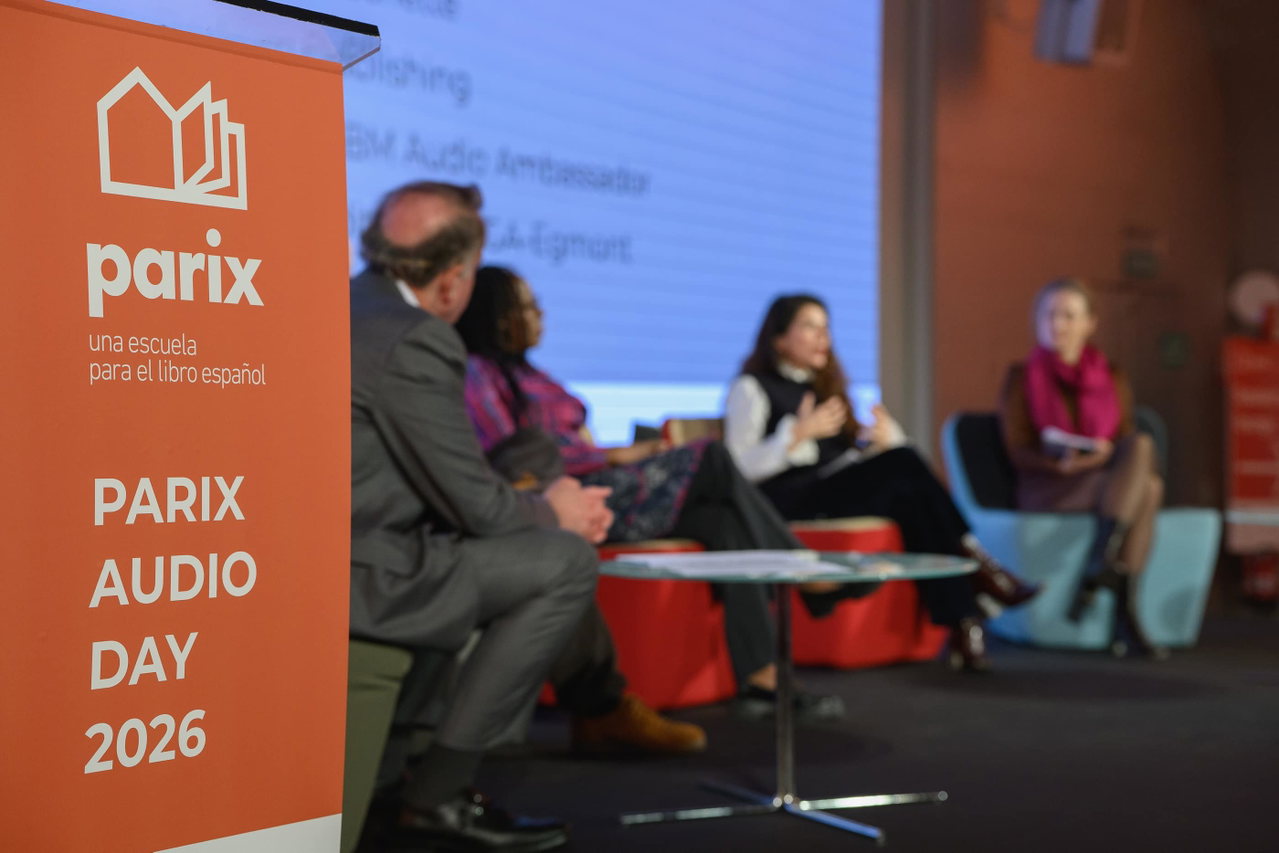
The third annual Parix Audio Day in Madrid highlighted how publishers can and should take advantage of this growing audio market around the world through technology, marketing tools, and use of AI.

Photos: Oscar Zamora / Fundación Germán Sánchez Ruipérez
The audiobook and audio content market continues to grow exponentially, with no signs of slowing, each day expanding to new listeners and, with that, new markets, new players, and new service providers. As this market continues to grow, there are incredible opportunities which publishers can take advantage of if they know how. These ideas were at the heart of Parix Audio Day in Madrid.
In its third year, the event – hosted by the Germán Sánchez Ruipérez Foundation in collaboration with the Ministry of Culture of the Spanish Government and organized by Luis González, General Director of Fundación Germán Sánchez Ruipérez, and Javier Celaya, founder of Dosdoce.com – brought together professionals in audiobooks, audio content, technology, and publishing from around the world. The program featured statistics about listening culture, the use of AI, new developments in audio content and production, how to reach new listeners/readers, and a deep dive into the Spanish-language market.
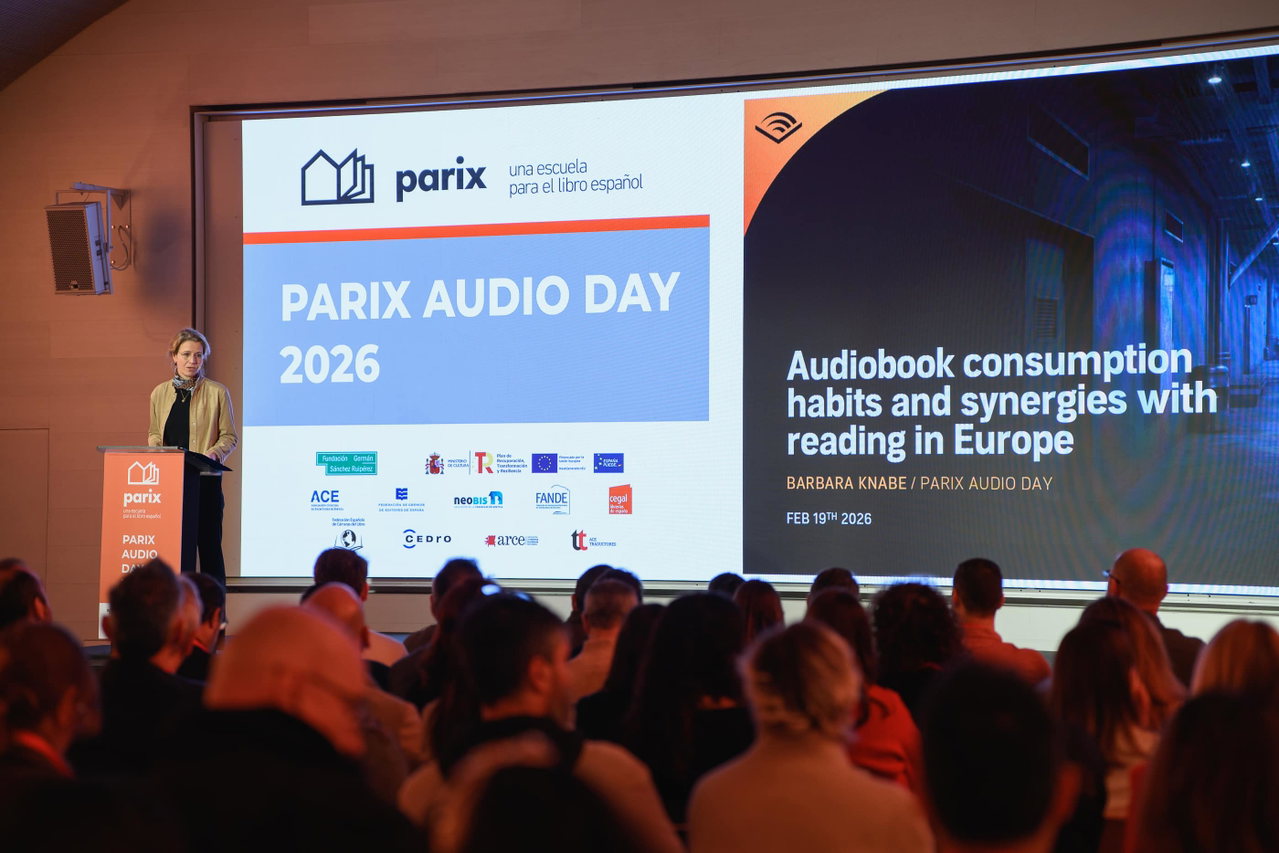
Barbara Knabe, Head of Content Acquisition for the EU at Audible, started the day with a keynote speech based on a survey they did on audiobook consumption habits in Europe, which we will share more details of next week. Some of the key takeaways were that 80% of listeners also read print books, 68% read more digital/print books since starting to listen to audiobooks, and an average 60% said they purchased the physical book after listening to the audio. While audiobook markets are in various stages of development around the world, Knabe highlighted that it was important for publishers to enter into the space.
Audible’s survey also seems to put to rest some of the concerns that publishers have that audiobooks are cannibalizing print sales and, in fact, help overall book sales across formats.
Seconding Knabe’s keynote at the top of the program, Duncan Bruce, Director of Audiobook Licensing & Partnerships at Spotify, noted that audiobook listeners are readers, so their new connection to physical books is not a strange one.
Bruce presented Page Match and their partnership with Bookshop.org, which Publishing Perspectives previously reported on, and also highlighted their new Recap feature which can summarize what has been listened to up to that point without giving away future spoilers. Their goal, as well as all the other speakers throughout the day is the same – to find readers where they are, to share content in the format (audio, ebook, print) they want, and to continue to grow the market.
Focus on AI
As could be expected, AI was at the heart of the day’s conversation, starting with a presentation by George Walkley, AI & Audio Publishing Expert and Founder of Outside Context who addressed the continued concern from publishers around the technology and its implication in the industry.
Walkley highlighted the gap between published books and available audiobooks and the need to close that gap. The use of AI for various areas of production and even narration makes sense and actually helps grow the market, with Walkley focusing on the type of content where more audio production and human narration might be more important – “lean in” (news, information) could be AI-narrated while “lean back” (entertainment, immersive storytelling) should continue to be human-generated.
One concern that Walkley raised was the challenge of the choice of AI tool publishers can use and the limitation of the distribution channels they can use to reach their audience, noting that Audible/Amazon only allows audiobooks developed with their AI narration technology to be sold in their channel, while Apple, ElevenLabs, and others have no limitations.
On the next panel, Ama Dadson, Founder & CEO, AkooBooks Audio and FBM Audio Ambassador, who works closely with ElevenLabs to develop books for her emerging market in Africa, highlighted how AI is helping them build a market where one didn’t exist previously.
While Dadson and other panelists Nataly Villena Vega, Head of Editorial at Hachette; Julia Balogh, Business Affairs at Parkum Publishing; and Lasse Korsemann Horne, Publishing Director of SAGA-Egmont, highlighted how AI was able to expand their markets, there were also some challenges – lack of emotional intelligence from AI-narrator, bad accents in other languages – but with a growing demand for content, it was necessary and helpful to use AI.
The panel “Innovation in AI + audio: licensing, marketing, production and distribution” featuring John Ruhrmann, Co-CEO Bookwire; Ralf Biesemeier, Managing Director Zebralution; Robert Holmström, Managing Director Earselect; and Rickard Lundberg, CEO Aniara, also highlighted some of the challenges with AI, noting that there are distinct limitations in its use as well as not enough research or study on some of the impact of using AI.
Yet, though there may be concerns, they highlighted that it is also important to test what works in the marketplace, be transparent, and listen to your customers and their feedback to see how to adapt to meet market needs.

Though AI may save time in some repetitive tasks or analyzing data or highlighting trends, each noted that the time saved was then being spent in other ways – checking the work done, building new types of engagement, working with local partners, and more.
Biesemeier had a slight change in tone from his panel in Frankfurt last fall when he was more hopeful about AI use. He noted that he was increasingly disappointed in AI and, while he still suggests that publishers familiarize themselves with the technology, he notes that it isn’t a solution for everything.
Licensing content to LLMs, which is the focus of a lot of AI discussions for publishers and authors due to the numerous ongoing lawsuits, was the focus of Ruhrmann’s portion of the panel. A question from the audience highlighted an important question around licensing – authors want to know how to license their content, but how to prevent it being used to create hate speech or other negative attacks.
Ruhrmann noted that there could be language around that in the license but also suggested an interesting point, that perhaps that was also a question of free speech and, even without AI, authors cannot control what one does with their intellectual property once it is out in the world.
Whatever one’s thoughts are about AI, Virginia Huerta, Managing Director of Archetype, noted a startling statistic, that 80% of consumers ask AI for recommendations on what to purchase – new books, new products etc.
In order for publishers to take advantage of this new discovery model, they must find new ways to be discoverable to AI bots that are crawling the internet and must continue to create content prepared to be searched for by LLMs, because what is discoverable one month may not be discoverable the next. Huerta highlighted that brands that create podcasts have seen an increase in discoverability.
And, though we hope we won’t all be working for AI agents in the future, screenwriter and writer of audio fiction Julio Rojas, highlighted that writers are not only using AI to help them write, and 97% of audiences couldn’t distinguish between AI or human content. With authors and producers using AI already in the creation of content, it behooves publishers to understand how it is playing out in content development as well as implications in the industry.
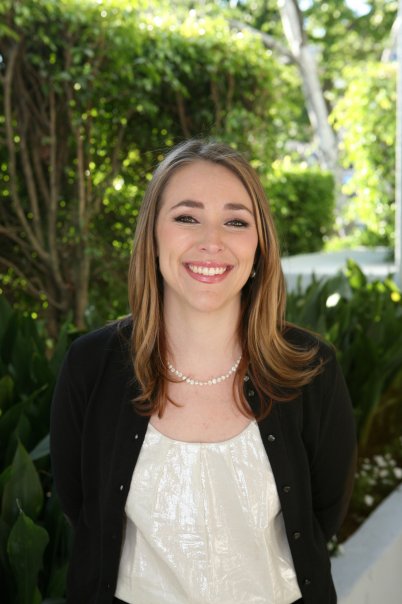
Erin L. Cox is the Publisher of Publishing Perspectives. She has spent more than 25 years on the business development and promotional side of the publishing industry, working in book publicity at Scribner and HarperCollins, advertising sales and marketing at The New Yorker, and consulting with publishers, literary organizations, book fairs, writers, and technology companies serving the publishing industry. Cox is also the Publisher of Words & Money, a new media site focused on centering libraries in the publishing conversation.