The appetite for fear
As romance and YA falter, US horror book sales are growing rapidly.
Published 9 Nov 2026 · Photo / Video: Final Destination Bloodlines, Youtube; The Twisted Spine
Horror trend in figures
How the genre is growing
39 %
Horror book sales are up 39 percent this year over last, according to Circana BookScan
5.1 million
5.1 million Horror books were sold in 2025, up from 3.2 million in 2021 (Circana via NYT).
In short
US sales of horror books are up 39 percent in 2026, while romance and young adult are losing ground.
Publishers and booksellers are responding with dedicated imprints such as Penguin Random House’s 3AM Books and with horror-only bookstores built around community.
In Germany, horror fiction is still a niche that Sebastian Fitzek and Annika Strauss aim to break open with REM, while new adult was still growing there in 2025.
US sales of horror books are up 39 percent in 2026. Publishers are launching dedicated imprints, specialist bookstores are opening, and also in Germany the genre is starting to find its footing.
The US book market is treading water in 2026. Print sales fell 3.1 percent in the first quarter, according to Circana BookScan figures reported by Publishers Weekly, and stayed flat through September. One genre stands out against that backdrop: horror. Sales of horror books are up 39 percent on last year, the New York Times reports, citing Circana BookScan. In 2025, 5.1 million horror titles were sold in the US, up from 3.2 million in 2021.
The surge has been building for years. Circana recorded a 24.2 percent rise in 2023. In the UK, Nielsen BookScan logged a 54 percent jump that same year, the strongest since reliable records began (Jane Friedman). In 2025, the Horror & Ghost Stories category posted record value sales in both the UK and Ireland, according to NielsenIQ. And at Canadian chain Indigo, horror sales rose 26 percent in June and July 2026, in the middle of summer and far from Halloween.
Meanwhile, the growth engines of recent years are losing momentum:
Romance carried US fiction from 2021 onwards, more than doubling its print sales.
In 2025, the category grew by just 3.9 percent to almost 44 million units, according to Circana.
In the first quarter of 2026, romance sales plunged 25.4 percent, largely because Rebecca Yarros’ record-breaking Onyx Storm was missing from the comparison.
Through September, romance and fantasy remained in the red.
The decline is even sharper in young adult. YA fiction lost 28.7 percent in the first quarter of 2026, the steepest drop of any category. Even in 2025, YA fiction was down 12 percent once Suzanne Collins’ Hunger Games prequel was excluded.
Horror, in other words, is not growing in a boom market but in the space the previous bright spots are leaving behind.
Big publishers build their own brands
For a long time, horror sat quietly inside thriller or speculative fiction lists. That is changing. Macmillan launched Tor Nightfire back in 2019, and Hachette’s SFF publisher Orbit followed with Run for It in 2025. In May 2026, Transworld announced 3AM Books, the first dedicated horror imprint in Penguin Random House’s history, named after the modern witching hour and launched with its own online community. Its first title, Fawn by debut author CN Vair, came out in August, alongside a reissue of The Exorcist.
The community element is not a gimmick. Horror thrives on fans who organise, swap recommendations and collect special editions. Publishers that take the genre seriously are therefore building brands with an audience, not just lists.
Bookstores devoted to horror
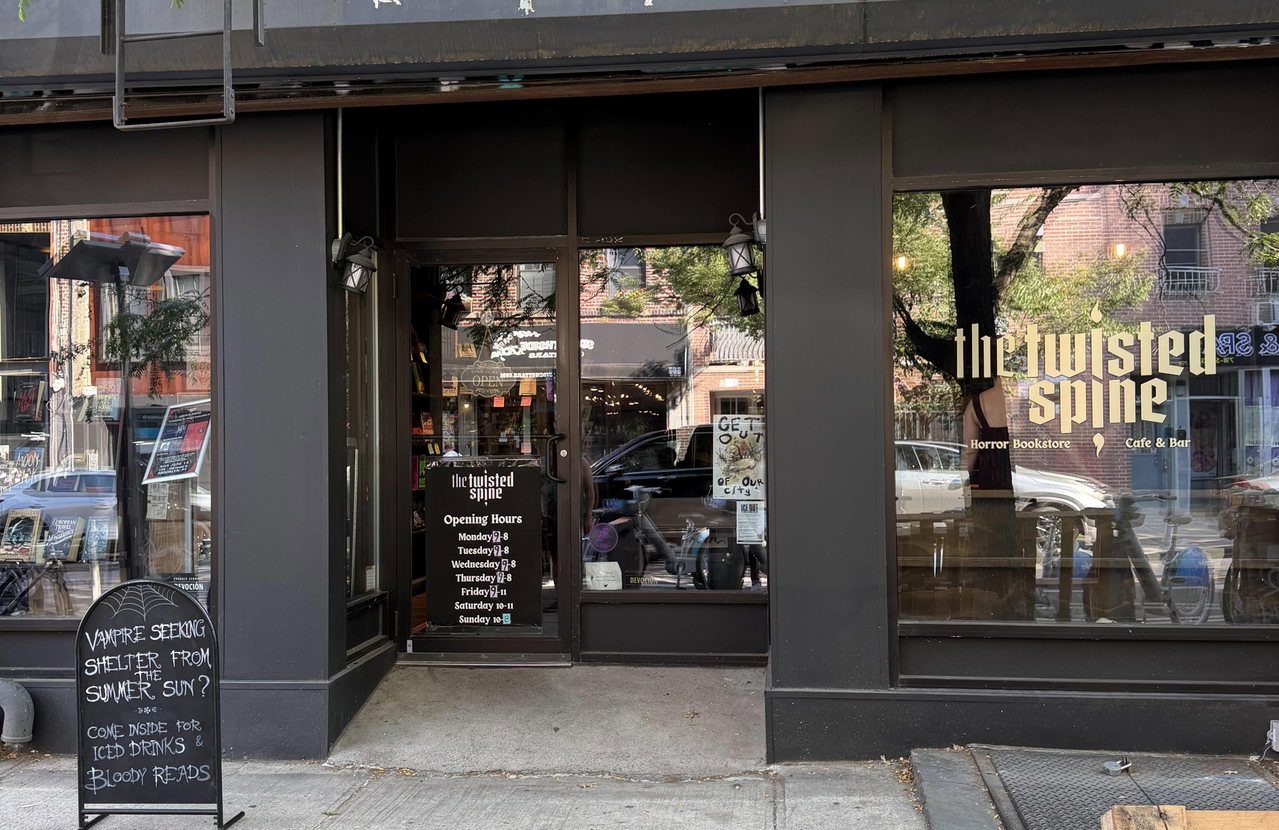
The trend is most visible in retail. Since August, several horror-only bookstores have opened in the US, among them The Infernal Annex in Olympia, Long Dark House in Alexandria and The Inked Page in Overland Park. Broom Book & Candle in Denver is due to open by the end of the year. Stores such as Little Ghosts in Toronto and The Twisted Spine in Brooklyn combine shelves with a café, readings and film nights. Little Ghosts even runs its own small press.
Women are increasingly driving the scene. At Midslumber Media in Portland, the Weird Girl Book Club is one of the most popular reading groups. Lauren Komer, co-owner of The Twisted Spine, links demand to a desire to experience fear in a controlled setting: “The world is terrifying every day.”
Horror meets romance
How far the genre now reaches is shown by its pairing with fiction’s biggest-selling segment. In October, Publishers Weekly devoted a feature to so-called horromance. Taylor Grothe’s Lethal Kiss (Nightfire) tells a queer love story around an undead creature from Norse myth at an elite university. Delilah S. Dawson’s Monstera (Titan) combines a haunting and botanical horror with a romance between two women. Horror rom-coms are joining in too, such as L.M. Gilmore’s This Is Why We Don’t Date Serial Killers (Sourcebooks Casablanca, January 2027). Grothe sums up the logic simply: falling in love is very scary.
Seasonality is shifting as well. Leah Hultenschmidt, publisher of Hachette’s romance imprint Forever, told The Atlantic that holiday romances are now being released later because autumn has become a selling season of its own, with titles ranging from cosy to creepy.
“our goal: bring the horror thriller into the mainstream”
Annika Strauss, Sebastian Fitzek
And Germany?
In Germany, horror fiction is still a niche, even though horror film and streaming are well established. Annika Strauss knows both worlds. She has worked on around 40 film productions and, by her own count, died on screen twelve times. When she wrote her first novel, a mix of thriller and horror, no publisher wanted it. “So I ended up writing a straight psychological thriller after all,” she says on our IGNITE! Publishing podcast. In March 2026, Droemer published REM, her horror thriller co-written with Sebastian Fitzek.
The duo’s stated goal is “to bring the horror thriller into the mainstream and make the horror corner in bookstores bigger,” Strauss says, with books from Germany rather than only imports (read our interview, in German). Fitzek puts the gap down to a lack of experience. In crime and suspense, he argues, Germany long deferred to American, British and later Scandinavian authors, cementing the prejudice that Germans couldn’t do it. Horror followed the same pattern, with masters such as Stephen King setting the bar. Streaming services, he says, have done a great deal to help German productions stop hiding.
There are early signals from publishers, too. A Penguin Random House Germany rights catalogue for spring 2026 lists horror as its own category, including reissues of Andreas Gruber’s novels at Goldmann.
On romance and young adult, the German picture is more mixed than the American one. New adult sales still grew 9.6 percent in 2025 and young adult 4.8 percent, keeping fiction up 1.2 percent overall, according to the Börsenverein, the German publishers and booksellers association, based on Media Control data. Growth in young adult is slowing, however, as the Börsenverein’s Thomas Koch told ZDFheute. And the overall market lost 4.1 percent in revenue in the first half of 2026. Genre figures for 2026 have not yet been published. For publishers whose lists lean heavily on new adult, horror is an obvious next step, especially since horromance bridges both worlds.
What the industry can learn
Horror is growing not despite an unsettled world but because of it. Circana counts the genre among the escapist and speculative categories that are bucking the market trend in 2026. Cinema has prepared the ground: in 2025, horror accounted for around 17 percent of North American ticket sales, according to Comscore, up from four percent a decade earlier.
For publishers and booksellers, four lessons follow:
Make space. Horror needs its own visible section in the store, not just a Stephen King shelf.
Combine brand and community. 3AM Books and the new specialist stores show that readers follow a recognisable home.
Use hybrids as a gateway. Horromance and horror thrillers such as REM bring in readers from other genres.
Plan year-round. Demand doesn’t end with Halloween, as the Canadian summer figures show.
One caveat remains: the growth comes from breadth. Genuine breakout hits are still rare in horror, as The Bookseller points out. That makes the genre a field for patient list-building rather than quick blockbusters.
Newsletter
The latest from DIGITAL PUBLISHING REPORT every week
New articles from all sections, delivered by email once a week.