“The best boring machine for reading”
Michael Tamblyn on why the ereader works best when it gets out of the way – and where Kobo is growing next
Michael Tamblyn, President and CEO of Rakuten Kobo, talks about the return of young readers to digital, Kobo’s renewed push into the U. S., what a decade of all-you-can-read has taught the company – and the reader the industry is quietly letting go.

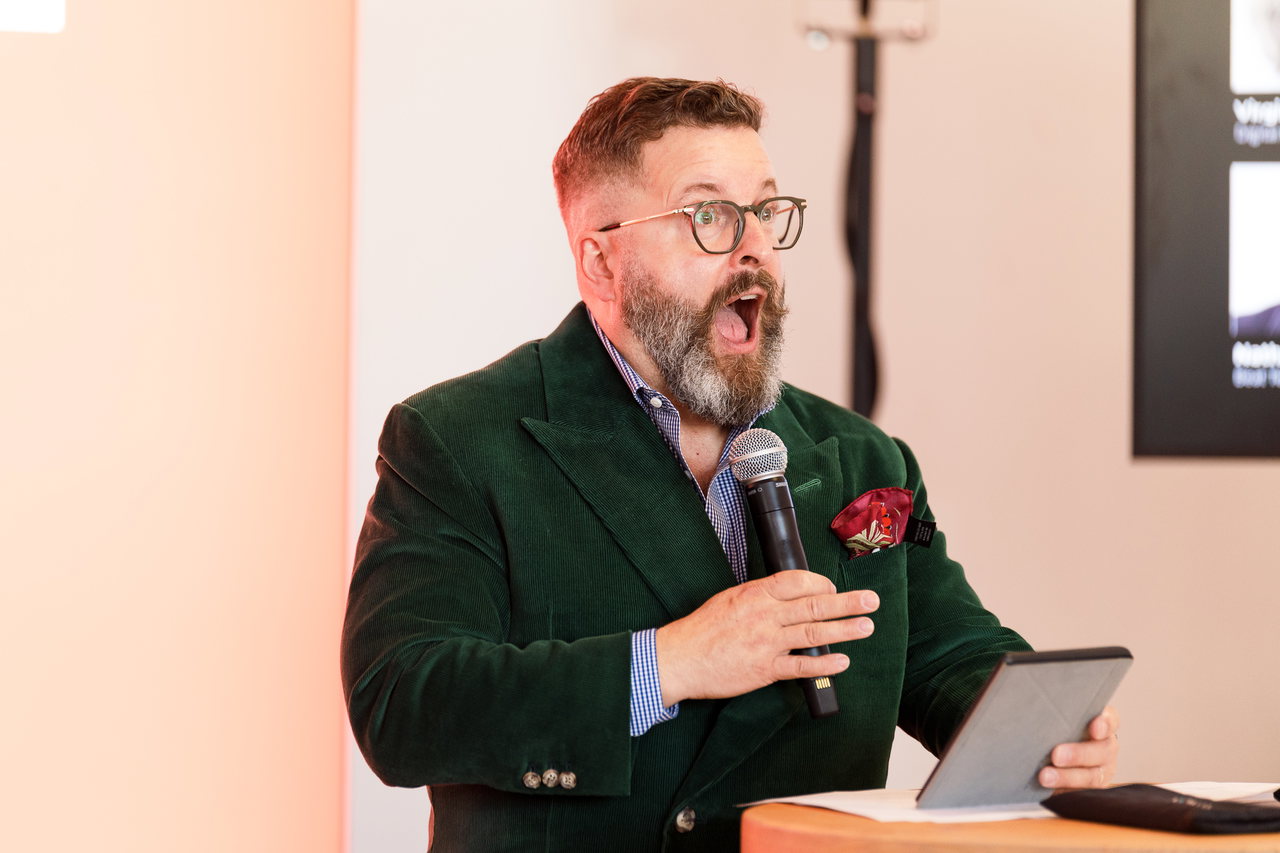
Published: 20.10.2026 | Foto / Video: Johanna Baschke
As a global company operating across many markets, how do you view the state of publishing today?
Publishing is in one of its periodic states of turmoil and emotional churn. eBooks in 2009-ish, audiobooks in 2015, pandemic in 2020, and now AI starting in 2025. It’s not a bad thing. Each of these episodes helps us figure out what the business means to us right now. They update our assumptions, shake loose some of the old habits, and also let new people into the industry when publishing houses need new skills.
You pay close attention to Kobo readers’ demographics, habits and preferences. What recent trends have interested or surprised you most?
The most interesting one for us is young people moving to ebooks and ereaders. Until 2022, people reading digitally tended to be older – a unique feature of books and their digital transition. But a combination of factors – the pandemic, fan fiction, other kinds of online reading, social influencers – meant young people emerged from the lockdown much more comfortable with digital reading. Combine that with an affordability challenge for books generally and more young people are reading ebooks than ever before.
Kobo recently expanded its U. S. retail presence through Best Buy, alongside Staples and Target. How important is the American market to Kobo’s growth, and do you see further opportunities there?
We may have been a bit ahead of our time as a Canadian-based company choosing to look at the U. S. as a nice-to-have rather than a need-to-have market. We have amazing fans and customers there and it’s the biggest ebook market in the world, but at the same time what success we’ve had comes from a focus on resilience through diversification, building presence in Europe, South America and Asia, growing through partnership rather than overwhelming existing retailers. Having built that base, we are now able to go back into the U. S. just as American consumers are looking for alternatives to the big platforms. That sentiment is responsible for several years of very exciting U. S. growth.
Kobo is known for its ereaders and accessories such as the Kobo Stylus and Remote. How have readers responded to these additions, and could ereaders become more sophisticated and versatile while remaining focused on reading?
The goal is to make beautiful and elegant hardware that keeps our users focused on long-form, immersive reading. If we see a way to enrich or deepen that experience, by letting them take notes or do more highlighting, or wrap themselves in a blanket and keep the pages turning without lifting a finger, it’s always with that same goal in mind. We sometimes talk about trying to make the “Best Boring Machine for Reading.” The books are exciting or interesting or engaging. The ereader needs to create the best reading experience possible and at the same time get out of the way.
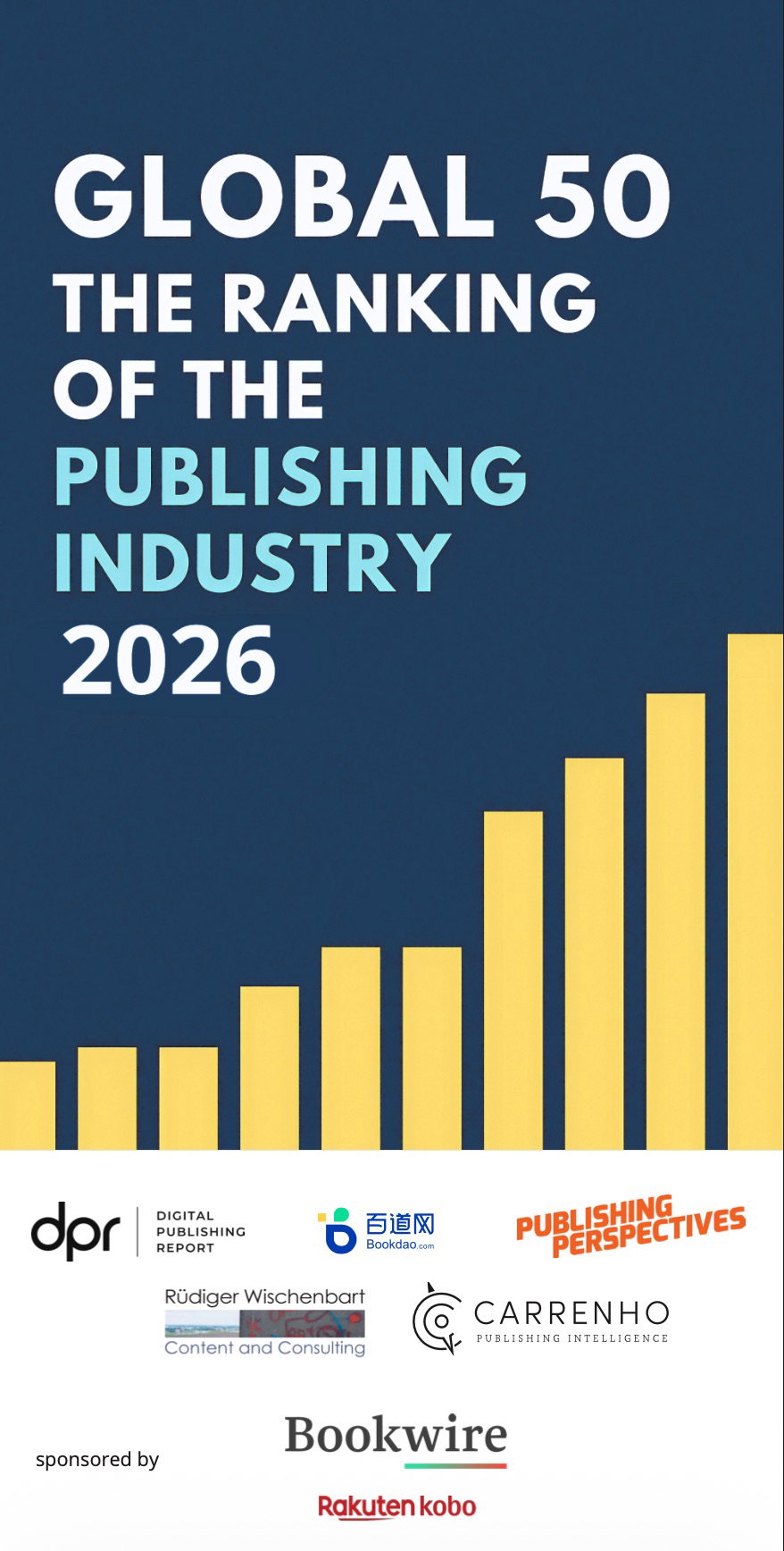
Global 50 Publishing Ranking 2026 – the report
This interview was first published in "Global 50 Publishing Ranking 2026".
The world’s ten largest publishing groups earned almost 36 billion euros in 2025. The Global 50 Publishing Ranking 2026 has the full list, Rüdiger Wischenbart’s analysis, and a wide-angle look at China, India and the platforms reshaping publishing beyond the traditional houses.
"Some companies treat audio as a near-existential focus"
Kobo invested early in the all-you-can-read model and has expanded Kobo Plus across many markets. Why did Kobo embrace subscriptions so early, and what has it learned about their impact on the wider book market?
We now have a generation of readers who has grown up consuming video and music on subscription models, and as far back as 2014 we were pretty sure that it was going to get more and more difficult to convince them that a single book should cost twice as much as a month of streaming video. At the same time, we have a very nice business selling books one at a time, so we were just as concerned as publishers about the possibility of cannibalizing single-copy sales. Fortunately, that hasn’t been the case. Instead, about half of the people who sign up for Kobo Plus have never purchased an ebook before. We pull them from library borrowing, piracy, public domain titles or fan fiction, and they become a new revenue stream for publishers and authors, while single copy sales continue to grow. Subscription readers are more likely to take a chance on a first-time author or an author they have never heard of, are more likely to read widely across categories, more likely to read a backlist title – all parts of the catalogue where publishers otherwise struggle to find readership.
Japanese commentators are increasingly asking when Kobo Plus will reach Japan. Can you share anything about its prospects there?
I can’t speak to future product launches, but Japan is one of our biggest markets for ebook sales thanks to the preeminence of our parent company Rakuten as a dominant ecommerce platform in Japan. Many characteristics of the Japanese ebook market are unique, not just because the majority of our sales are manga or because most reading happens on smartphones (although ereader sales have seen sharp growth in recent years). It’s a unique dynamic where publishers, authors, artists and the retailer all have a strong say in new business models and strong opinions about how best to serve the reader. It makes for one of the world’s most fascinating markets.
Audiobooks have become an important part of Kobo’s offering. How significant is audio to the company today?
Some companies treat audio as a near-existential focus, and do a great job serving that customer. Our focus is on the ebook reader who also wants to add some audio to their reading mix. It’s a great addition to our business and especially as a part of Kobo Plus, where our Read+Listen subscription has seen big jumps in growth over the last few years.

Kobo began integrating with The StoryGraph in June 2026. Why is this partnership important, and what do you hope it will bring to Kobo readers and the wider reading ecosystem?
One of Kobo’s founding ideas is that you can have a successful ebook platform without having to build ever-higher walls around it. You should be able to buy a book and archive it off our systems. Or use an industry standard DRM to move it to another device you own. You should be able to easily grab an article from the web to read on your ereader. Or borrow from a library. That same spirit is behind the collaboration with the great team at The StoryGraph. We have lots of readers who love tracking their reading. Why not make it easy for that data to move to show up on The StoryGraph? And can that be a model we use for other collaborations in the future? I think so.
For a digital reading platform such as Kobo, where can Artificial Intelligence create the greatest value, and how can the publishing industry pursue those opportunities responsibly?
In some ways we are like any other tech-based business. There are huge productivity gains across the organization everywhere from software development to internal reporting and we have made significant investments to ensure that all of our employees feel comfortable with the tools now available, and secure that our goal is to enhance what they do rather than replace what they do.
At the same time, we are a book-focused business. That means looking at how these technologies can be leveraged to help us be a better bookseller, with better discovery and recommendations, while also using AI-based tools to help hold back the tide of low-value AI-generated content that could otherwise overwhelm our catalogue. We always try to keep in mind that this whole business only functions if authors can continue to find readership without being buried in AI-created content. If we want new stories and unique insights that shed light on human experience, then our job is to create an environment where authors and readers can find each other.
As a thoughtful observer of publishing, what do you believe the industry is currently overlooking, and what should publishers and booksellers pay closer attention to?
In this business, we have a natural bias towards people who put books at the centre of their lives. Those are the people who are drawn to the industry. They are also the people who generate the sales that keep the industry going. And we get better every year at finding the books that energize that segment of the market, so sales keep going up and we congratulate ourselves for a job well done. But I fear we are losing a large but under-appreciated segment of the market: the person who reads one or two books a year, the person who isn’t a “heavy reader” or “passionate booklover.” This person used to buy a book because there was nothing else to do on the plane or the train or at the beach. Now they are scrolling instead. Losing that person isn’t just a loss of sales or a customer. It is losing a person to long-form reading, to depth of knowledge or a sustained narrative. That person is now more likely to have their opinions shaped by an algorithm, or be pulled away from empathy and towards the extremes. We should never give up on that reader and be more dedicated to finding and engaging them. Our ability to cast a wider net of readership will determine whether books continue to be a mass media or become a lovingly curated but ever-more-concentrated niche.
"The challenges that surround this business are so interesting"
Kobo employees often describe the company as human, enjoyable and collaborative. How important has that culture been to Kobo’s success, and how do you preserve it as the company grows internationally?
Every company has filters that help determine whether this person is right for the company and whether this company is right for the person. One of our most obvious but important ones is whether they love books, readers and the culture of reading. We hire incredibly talented, highly sought-after individuals. The thing that makes them choose us, out of all of the other places they could work, is that the challenges that surround this business are so interesting. Hardware and software, e-commerce and bricks-and-mortar booksellers, ereaders and smartphones, traditional publishers and indie authors, different reading cultures, different languages, international supply chains, but at the same time, a not-that-big team so your contribution really matters. It’s the best.
Finally, you studied music and composition. Has that background influenced your leadership style or helped you “conduct the orchestra” of a global company like Kobo?
There is a feeling that I think every composer or conductor experiences at least once: It’s the weight that lands on you when you are in front of a room full of people who have worked their whole lives to occupy the chairs that they are in, who have honed their skills over tens of thousands of hours and are at the top of their game. Your job is to bring all of these talented, committed individuals together to create a single experience worthy of their time and effort, not to mention the time of the people who will show up to listen. That’s what it feels like when I show up to work at Kobo. It’s a pleasure and a privilege just to walk through the door.

Michael Tamblyn (LinkedIn) is President and CEO of Rakuten Kobo and has been part of the company’s executive team since its founding in 2009, previously serving as Chief Content Officer and President. He also oversees Rakuten’s other eReading businesses. Before Kobo, he co-founded Bookshelf.ca, Canada’s first online bookstore, which was acquired by Indigo Books & Music in 1998 to create Indigo.ca, where he served as Vice President of Online Operations. He later became the founding CEO of the supply chain agency BookNet Canada.