From mass market to masterpiece
Daniel Lenz on opportunities for refinement in the book industry
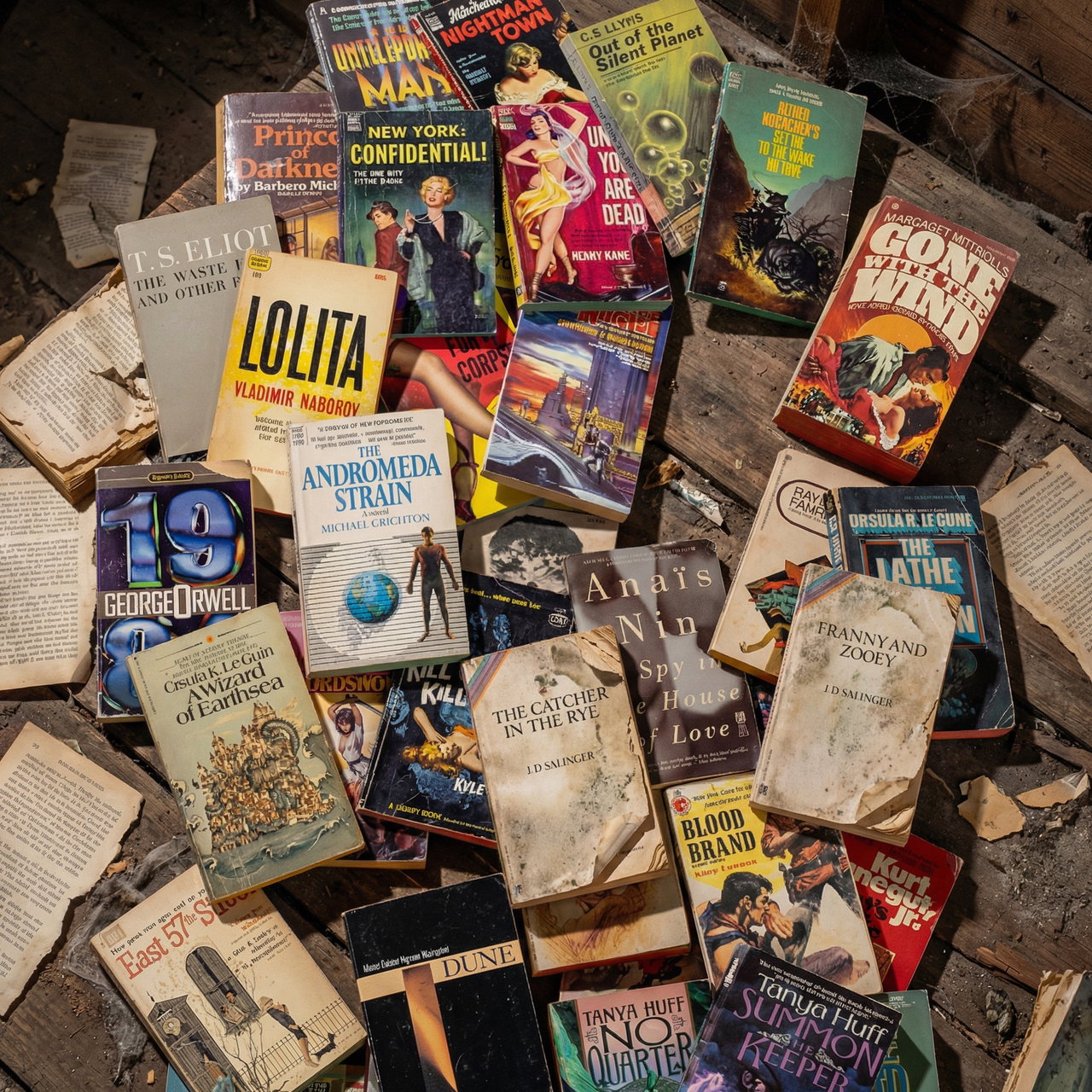
The book industry is in a tight spot. Unsurprisingly, the mass market for paperbacks is collapsing – in the USA from 103 million copies sold in 2006 to less than 18 million in 2024. In addition, non-fiction books are continuously losing circulation. One assumption suggests that podcasts and other digital knowledge formats – including, of course, the increasingly popular responses from AI chatbots – are undermining the format. And even audio, which has been a source of hope for several years, is facing difficult times, at least according to analysts such as Carlo Carrenho, because AI-supported text-to-speech technology is developing so rapidly that audiobook files could become obsolete in the future and be replaced by AI-supported on-demand audio versions of e-books – a service provider such as ElevenLabs does not need a studio or voice actors.
Even if it is not entirely clear how strongly these trends will impact our industry – we remember that the dirges for the printed paperback (which I also joined in with) following the invention of the e-book were premature – it is nevertheless reasonable to conclude that a way out cannot be found in the middle of the market, because that is currently disappearing. The answer lies at the top: in "premiumisation", in refinement.
What initially sounds like a niche strategy has long since proven to be a viable business model. The "romantasy" boom is the clearest example: These surprisingly print-savvy readers don't just buy a book – they buy a collector's item, special editions with colour edges, embossing, signatures – all of which has built up a community with strong purchasing power that is willing to spend many times the price of a paperback. The physical book becomes indispensable when it does something that no e-book can replicate: it is an object with weight, with haptics, with meaning, and also with the option of personalisation ("bedazzle" is the keyword here).
This mechanism works far beyond the young adult genre. How about a newly published collection of classics – only that the volumes are not budget hardcovers, but rather elegant favourite books, ideally even customisable? This example shows that the crisis of the mass format is not just a problem, but an invitation to reposition oneself.
Non-fiction also needs to be repositioned. Podcasts such as "The Rest is History" show that there is an audience for complex content – but this audience has learned to consume it while walking or driving. The quality argument does not apply here, because podcasts now also provide excellent deep dives on every conceivable topic. The book must reinvent itself: not as a faster, more up-to-date or supposedly higher-quality alternative to the podcast, but as a consistent counterpart or complementary format. Premium could mean here that the "book" offers updates and updated chapters. The opportunity to contact the author. A ticket to the next reading...
The perspective is more complex for audiobooks. This is because they are in direct competition with podcasts, often sharing the same channel (e.g. Spotify) and the same usage behaviour. Here, a premium strategy boils down to targeting special productions. A multicast and immersive production such as the "Harry Potter" titles by Audible is more suitable as a showcase than as a blueprint for publishers due to the high costs involved. And yet it may point the way forward. In the future, the standard audiobook may be narrated by ElevenLabs & Co. using AI voices. But there is still plenty of room for special sound experiences, plays for the ears. By and with people.
What all new premium formats have in common is that they are significantly more expensive to produce. Business models of the past – printing public domain material on cheap paper with high margins – will eventually die out. Those who continue to rely on them – as many titles as possible, as quickly as possible, as cheaply as possible – will lose out in the long run to algorithms and content creators. Those who, on the other hand, understand quality as a strategic stance can occupy a position that no AI-generated content and no podcast feed can challenge. The mass market is dying. What remains is the book that you can't throw away – because you don't want to.
Daniel Lenz is editor-in-chief and co-managing director of the DIGITAL PUBLISHING REPORT.