
"Be brave. Be imaginative. Be decent"
Women in publishing technology Emily Guille-Marrett, Pickatale
In this interview series, we speak with women leaders who are shaping the future of publishing technology. They share their perspectives on digital innovation, inclusive leadership, and the challenges of working in a male-dominated tech environment. This time: Emily Guille-Marrett, Pickatale.

Photo/video: Freepik
The publishing industry is undergoing a digital transformation – and women are playing a decisive role in shaping this change. From artificial intelligence to new distribution channels and innovative production processes, technology is fundamentally changing how books are created, distributed, and read. But who are the women behind these international developments? What visions drive them, what challenges do they face, and how do their perspectives shape the future of publishing?
This interview series is a collaboration with Emma House, an international publishing consultant specialising in event curation and management, research and reports, international business development and mentorship. More information.
Further interviews from the series
Read also the interviews with Sarah Arbuthnot, Meru Gokhale, Ingrid Skrede, Awatef Mozbeh, Arantza Larrauri, Laura Werle, Brooke Dobson, Virginie Clayssen.
How did your career lead you to work in Publishing Technology?
Digital publishing, in some way, has always been a part of my career from the beginning. I started first at Pearson Education proofreading textbooks, editing a primary school reading programme and web editing, before working on a teaching tips website, curating and creating content for schools. What has changed is the ratio of print and digital products being worked on in the different companies over the years. I learned early on, especially at Oxford University Press, that my passion was to do everything I could to support children’s literacy and reading enjoyment.
How do you feel the publishing industry is embracing new technologies?
It is a very mixed picture just now. In sales, marketing, operations and project management there have been some really interesting innovations, such as Shimmr, which utilises AI to create and run automated ad campaigns for publishers. Of course, industry software now has more AI embedded in it. When publishing colleagues say to me “we don’t do AI”, I always question that. If you’re using Photoshop, for example, then the chances are you are using AI in some way. And I know many publishers who are using AI video tools for marketing.
In educational publishing, there appears to have been much more confidence in utilising AI for assessments and personalised learning pathways. But in general, I feel traditional publishing teams have perhaps been a little slower to embrace AI than I had originally anticipated – maybe due to important copyright concerns – although this is changing.
In 2023, the Publishers Association and The Bookseller invited me to be part of a panel to discuss AI and publishing. A lot has happened since then, which was evident at 2025’s Futurebook conference in London. There is more awareness of what AI can do to help, including: strengths and weaknesses of different AI tools, confidence in using tools (text, image, audio, video), and understanding how there is a place for AI (still usually in an augmented way) without compromising on quality. Even a year ago, some people were surprised that whilst many Pickatale library books used voice actors for audio narration, we also embraced AI. Yoto, the interactive audio platform for kids, is now partnering with ElevenLabs. This is one of the core products we use in our AI book creator too, so children can listen to books in multiple languages.
It’s really important that we catch up with the technologies available – especially if we are serious about re-engaging the global decline in reading for enjoyment. A reader is a potential customer – and that can be in both print and digital formats! This doesn’t mean, of course, a lack of respect for the craft of writing and illustrating. And we need to ensure we teach children the importance of future-ready skills (such as critical thinking or AI prompt crafting) alongside traditional literacy. I’m super excited about the role Pickatale’s AI book creator can play in supporting educators, teachers and children in this.
"I still imagine gorgeous print book publishing in ten years time"
What technologies are you most excited about that will change the face of publishing over the next 5-10 years?
Oh my goodness – that is a long time given the speed of change just now! But I’ll give it a go.
I believe licensing deals for characters in AI book creation platforms/products will be normal. Children can now see themselves in printed books through companies such as Wonderbly – but this will be everyday and playful reading on screen. The stability in character creation now at Pickatale in our AI book creator has significantly advanced in just 3 months – so I can’t wait!
Licensing to train AI is already taking place across the industry. I’m excited to see licensing deals where children can “write in the style of a particular author”, or have their stories “illustrated in the style of a particular artist or brand” – much in the same way as AI audio narration licenses actors’ voices.
Technology will mean that more texts are accessible to more people – for example, AI will mean that more children (and people generally) will be able to access texts at their reading level or in multiple languages. And reading content will be created to appeal to young people’s interests and encourage them to read more.
I’ve heard about adaptive learning for YEARS! Haven’t we all? But now with AI and utilising data for precise personalisation, the promise of adaptive learning pathways through educational publishing products for specific learners can and will deliver on that promise.
Automated workflows will become normal rather than shocking or scary. Check out tools such as n8n or get someone into your company to help like Darryll Colthrust, Co-CEO of CHAPTR and AI Board Advisor at Holtzbrinck Publishing Group. You can hear him talk with me on this panel here.
Agentic AI will be included in parts of our businesses (where AI agents perform automated tasks with or without intervention from humans). Don’t ask me how yet but it sounds both exciting and scary – and will become normal.
I believe that whilst AI could be a threat to endangered languages, it also has the potential to allow people to access more voices in publishing and across many languages. If humans embrace this and we invest in ensuring a truly diverse range of languages, then it could be an incredible opportunity.
On that, as someone who has championed diversity in publishing for many years, including most recently as a trustee of CLPE with their work on Reflecting Realities (now part of the UK’s National Literacy Trust), I have to hope that more will be done to ensure that AI models don’t absorb and amplify existing biases, for example around race and gender.
This isn’t my field of expertise, but from what I can see from publishing news and across in other industries like fishing, traceability will be incredibly advanced with data and tracking to ensure profitability is maximised from tree to book to customer. This will be in addition to technological advancement ensuring more environmentally friendly solutions and formats – 100 % sustainable paper use, eco-friendly materials, and reduced plastic in packaging.
Finally, and this may surprise you, I still imagine gorgeous print book publishing in ten years’ time. In a world where fast and often fake content (including AI slop) will become normalised, there will be a real value for crafted “slow” publishing where books continue to be produced. How they get to our hands may change (by drone?!) but I hope I can still walk into my local bookshop and library as well. It is interesting to me that in some territories, there has been interest in being able to print out books created using Pickatale’s AI book creator. That’s something I hadn’t expected!
How do you personally use frameworks or decision-making tools to create fairness and objectivity in your leadership?
It may sound old-fashioned but I find the Project Management triangle (Quality, Time, Cost, Scope) always helps with speedy, joined-up decision-making.
I’m not sure this counts as fairness but one of the best decision-making tools I’ve ever come across was from executive coach Jo Howard – CIA. What can you Control? What can you Influence? And what do you just have to Accept?
I’ve used this myself but it’s also helped me with small teams who report into me, especially when colleagues are super passionate about pushing something through perhaps without a wider sense of what is going on in the business or industry. The acceptance part is particularly important for me in a high-pressured, fast-moving environment. I want to make the best decision for the business, the people and the output. It allows me to know where best to put my energies right now. Long-term strategic planning is different, of course.
Creating a safe and positive environment for colleagues is really important. In the past year, I’ve been on a massive HR journey and have commissioned Croner HR for all Pickatale’s UK employment issues. Ensuring we have fairness and objectivity as a board is critical to grow and retain talent.
"Diversity and inclusion should be central to our industry"
How can we ensure new technologies in publishing are inclusive and benefit a wider range of voices and stories?
Diversity and inclusion is something that should be central to our industry, whether with technological advancement or not. I recently returned from Kazakhstan and Uzbekistan where publishers and government officials are keen to encourage buying rights for the world’s best stories and nonfiction to translate into local languages as well as export a wealth of stories and contemporary talent to the rest of the world. It made me think that it’s still important we continue to value human translators who craft the work and are able to successfully deliver the essence of a literary work in these sorts of rights deals. However, there are instances where a first AI translation pass is a fantastic way to get things moving and speed things along.
It’s the same with accessibility. When developed well, new technologies can make texts more widely available to everyone.
When it comes to technology, if you had an ask of the publishing industry, what would it be?
Embrace the opportunities AI can bring you and your company. Do so critically and wisely but definitely have a go!
(Of course, this is alongside the very serious legal battles taking place with Big Tech companies and intellectual property. I am not making light of that and am grateful to the experts in the industry working on this. It has been fascinating to sit on the UK Publisher Association’s AI taskforce since it began.)
What skills do you think the next generation of publishing leaders need most?
I still espouse the values that Dame Marjorie Scardino and the team at Pearson used to share many years ago (more than I’d like to admit): “Be brave. Be imaginative. Be decent.”
Honestly, those qualities are still relevant today. Within bravery there is a requirement to learn new skills and embrace change – the next generation of publishing leaders need to be open to this. Imagination is a core human trait and creativity is central to our industry. We must ensure the next generation dare to imagine. But with all the promise and profit new tech might bring, we must remain decent and critical in our thinking. Indeed, our education system must adapt to ensure future-ready literacy skills, like critical thinking, are key to young people’s education and opportunities – especially with the rise of fake news.
I was clear that we had to be mindful and responsible in our work with AI at Pickatale, otherwise it would not have sat well with me, whilst embracing all the positive opportunities new technologies bring. I could also see the commercial benefit of showing that we evidence what we do – for investors too. It’s great to see how my role has developed with this in mind and I now oversee an EDU panel, focused on embedding evidence, efficacy and impact in everything we do. This is testament to our CEO, Sig Dugal, willing to take a punt on an idea I had long before it gathered momentum. As such, I now work closely with the International Centre for EdTech Impact and sit on the AI Taskforce at the UK Publishers Association.
Much of this is self-driven and self-motivated: We need future publishing leaders to be comfortable embracing change whilst pivoting and decision-making quickly but thoughtfully. Future publishing leaders will also need to be resilient, comfortable to challenge, open to risk and be able to learn from failure fast. They will need to be open to training and learning new skills. Recruiting the right talent around you with effective checks and balances in place will be essential.
What is one leadership myth or stereotype about women that you’ve personally worked to overcome—or help others see differently?
There are so many that I’m struggling to pick just one. But I have to use this opportunity to champion mothers and carers in business. I have observed women working “part time” contractually in our industry so they can be present in children’s lives, but they have worked full time hours (evenings and weekends) on their part time salaries. Technology now allows for truly flexible working for all parents, or anyone living with caring responsibilities such as elderly parents. I’ve observed many people in physical offices not delivering effectively at work and other people rocking it working from home. Allow people to have a life and equip them with the technology, skill and environment (and that could be remote) to ensure you get the best for all parties.
How can the industry better support and advance women in technology leadership?
It’s still surprising to me that I can sit in a room (whether virtual or not) and be the only woman in a meeting, and I’m working in a supportive environment.
Here are a few thoughts:
Elevate women to key decision-making bodies (including at executive levels)
Encourage allyship with other women (in-house and across industry networks)
Share success stories of women across the company and industry
Embed flexible and remote working opportunities to retain and support talent
Review and address any gender-pay gap
With the speed of advancements that technology and AI bring, quality human skills are still desperately needed in-house. Consider internal training to women with transferable skills and encourage them into publishing technology.
Ensure diverse interview panels for new roles
Recruit women from outside the traditional publishing industry e. g. gaming, data engineers etc.
"Publishing technology is exciting just now - where you get to be creative and commercial"
What advice do you have to encourage more women to work in publishing technology?
Publishing technology is exciting just now – where you get to be creative and commercial. It’s cutting edge and no day is the same. In my experience, you can add real value to the industry and, in the right company, build a successful career around family life too. You get to play in your job – with ideas and with new technologies. The people you get to work with and meet are hugely diverse and will both challenge and support you. My advice would be to really look at the opportunities available to you just now. Your role may not exist in a few years (or even months) time. Your talents and skills are needed. So embrace AI, play with new technologies, be clear about where you can add human value – and get stuck in! If you’re feeling wobbly, seek advice from business coaches or your line managers.
I thoroughly recommend speaking with publishing recruitment specialists such as Abigail Barclay or Verity Hawson at Inspired or Danny Pearson at Think Selection for advice too. And check out the Bett show (where Pickatale is a finalist in the Bett awards 2026), the London, Bologna and Frankfurt Book Fairs this year to see what’s happening in the industry just now.
If you’re new to the publishing industry altogether (e. g. graduate or entry-level job), respect and listen to the expertise around you. But be bold too as your fresh take on the industry will be to your advantage (if given permission to explore of course). At Pickatale, we had three graduate trainees join us with a fantastic grounding in traditional publishing and design degrees (from Bath Spa, Oxford Brookes and Canterbury Christchurch universities). We were experimenting with new technologies when they joined which, at the time, seemed at odds with some of the advice they may have been given on their courses. As they didn’t have any history of what publishing looked like and were open to embracing and playing with new technologies too, it really helped having their input and ideas in cross-functional teams.
Would you share a situation of gender bias with which you were confronted and which helped changing your outlook on your work?
Of all of them (and there are many including once being asked at interview how my husband felt about me working?!), I think the biggest observation I have had is around working parents and carers, especially mothers. I try really hard to see all angles – from the individual needs to the business needs. Interestingly, I’ve seen many women line managers not support parents with caring needs. In fact, the greatest example of how to line manage was from my previous line manager Martin Casimir. One extreme but real example is when my father went into hospital with Parkinson’s and began the journey to end of life care. I set up my virtual office initially in the hospital and was given freedom over a number of weeks to work full time hours but at flexible times. Eventually I had time to log off completely for the funeral too.
My attitude is to look at the job that needs to be done and be clear on the communication that needs to take place for all parties and then allow people to prove that they can get on and do the job well.
I’d also like to add that if you are a woman who has decided to leave the office and freelance after having a baby – don’t undersell yourself because you feel you have to be grateful for the fact you are juggling parenting and work. Be aware of what people are charging and know your worth.
What is likely to change if there were more women in leading positions in your line of business?
As someone who works with an all-male senior leadership team, I won’t be answering that. Ha ha! No seriously, evidence shows that a diverse leadership team is critical for success. Women help drive innovation and contribute to creating inclusive products that serve everyone. In my limited experience, women encourage networking and supporting other women in the industry too. It’s a win, win!
Which other women do you most admire in the area of Publishing Technology?
So many and I’m concerned I’ll miss someone but here we go:
Oxford University Press has some seriously talented women in tech talent, all of whom I’ve been lucky enough to work with at different points: Maxine Durnin, Kate Marzillier, Mirkka Jokelainen, Emma Thomas to name a few.
Although Prof Natalia Kucirkova comes from the world of academia, her work on digital technologies and children’s learning (especially reading) has been prolific. I believe she should be noted for her influence in publishing. Certainly, her work with Pickatale and the International Centre for EdTech Impact has helped our reading platform embed evidence and efficacy in all we do.
Anne Lise Waal rocked it at the Nordic EdTech conference this year. From gaming to publishing, I’m excited to see what comes from her new strategic role at Cappelen Damm (Norway). Her talk was certainly inspiring!
Natalia Jaszczuk is VP of Product at Hachette Learning. She not only champions technology in education and publishing but she supports women in publishing, product and tech too. Big shout out to her!
Lindsay Nadin is Digital Product & Services Director at Cambridge University Press and Assessment and another person in our industry who is doing awesome things.
Brigid Evans is Director of Business Operations at Pearson and has to be acknowledged as the queen of AI Ethics in our industry.
Searsha Sadek is Founder and Chief Product Officer at Shmmr focusing on AI and automated book advertising. If you’re interested in marketing then she’s definitely worth following!
Sarah Aspden is Pickatale’s AI, Pedagogy and Instructional Design Lead. I’ve learned so much from Sarah and really value working with her with our shared enthusiasm for EdTech, Pedagogy and children’s reading. She’s definitely one to watch!
Emilia Kruszewska is CEO of RecruitHer Consulting, a specialist recruitment agency committed to championing diverse talent for EdTech companies.
Ingrid Skrede is Co-Founder & CMO at Ludenso, who is spearheading the transformation of textbook publishing and learning with AI. She's committed to evidence and impact in her work and committed to bring books to life for publishers and readers!
I’ll always be grateful to Kate Harris, Lorna Cocking, Andrea Carr, Lee Newman, Andrea Quincey and Jasmine Richards for supporting me at various points in my career. Women in publishing and technology need to be surrounded and supported by other talented women too.
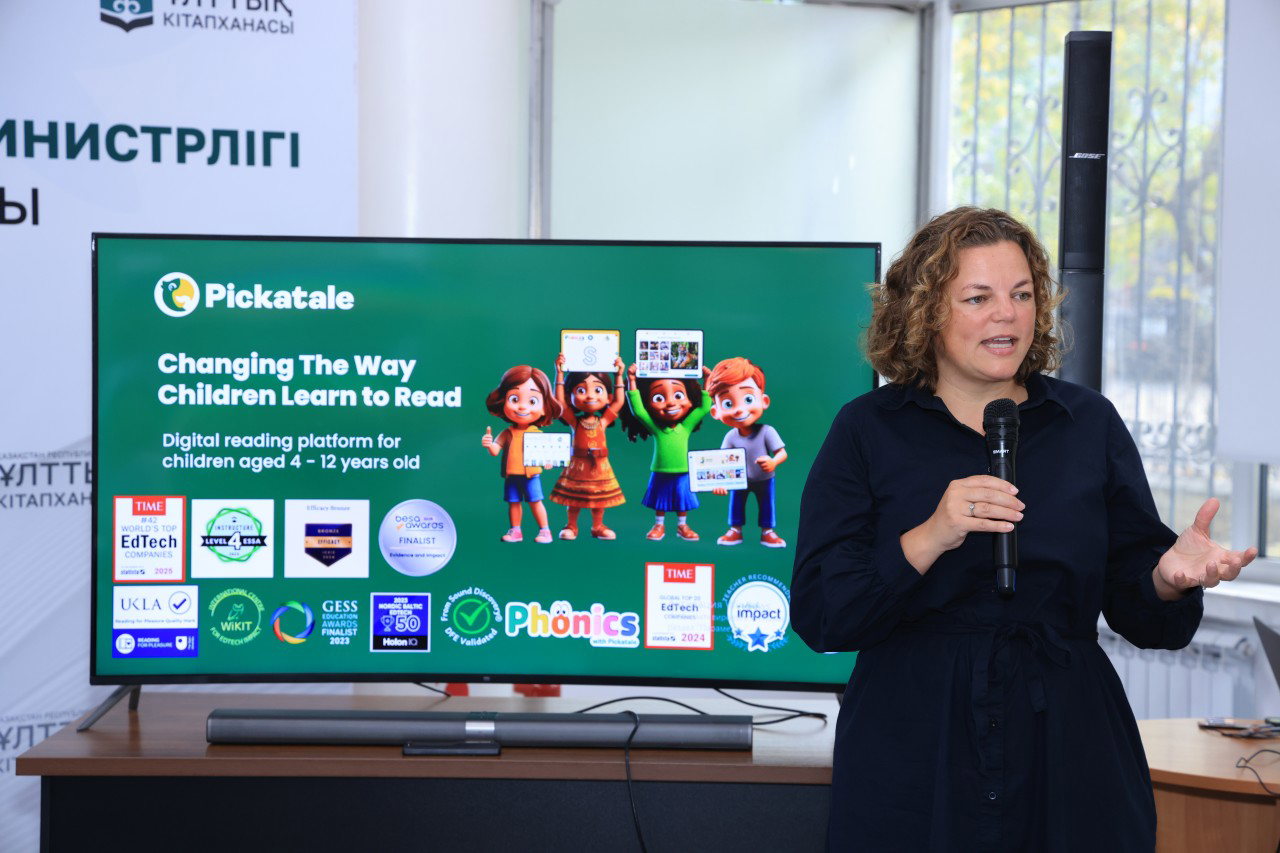
Emily is Chief Education Officer for product and publishing at Pickatale, an award-winning reading platform for children aged 4–12. She has led Pickatale’s transformation into an educational platform that embeds evidence and impact across all areas of the product, including its AI book creator and digital library of commissioned and licensed books. With more than 20 years’ experience in EdTech and publishing—including Oxford University Press and Pearson—Emily sits on key industry committees, such as the UK Publishers Association and Society of Authors. She has over 5 years’ experience teaching Creative Writing in higher education and is founder of Reading Fairy pre-school classes. Emily regularly speaks at publishing, education and technology events.