An excerpt from All Rights Reserved: Lessons in Publishing by Richard Charkin and Tom Campbell
Book fairs, before and after the deal was done over lunch
Few people have watched the publishing industry change from as many vantage points as Richard Charkin. Since becoming a publisher in 1972 he has held senior positions at Oxford University Press, Reed Elsevier, Current Science Group, Macmillan and Bloomsbury. He has served as President of the International Publishers Association, the UK Publishers Association and The Book Society, and he sits on the International Advisory Board of the Frankfurt Book Fair. Today he chairs Thames & Hudson, runs Mensch Publishing, and advises a string of technology companies working on the trade's next chapter.
Published: 22.9.2026 | Foto / Video: Frankfurter Buchmesse, Gian-Luca Heiser
His new book, All Rights Reserved: Lessons in Publishing, written with Tom Campbell, is published by Marble Hill Publishers on 24 September 2026 (read more)
It follows his memoir My Back Pages, but the ambition is a different one: less looking back, more a working description of how the industry actually operates now. Charkin covers the relationship with authors and agents, the roles of booksellers and wholesalers, the international reach of English-language publishing, the economics that hold a title together, and the effect AI is beginning to have on all of it. Because so much of that is in motion, author and publisher have committed to regularly updated editions, each clearly marked, so that anyone learning the trade from the book can be confident their copy still describes the trade as it is.
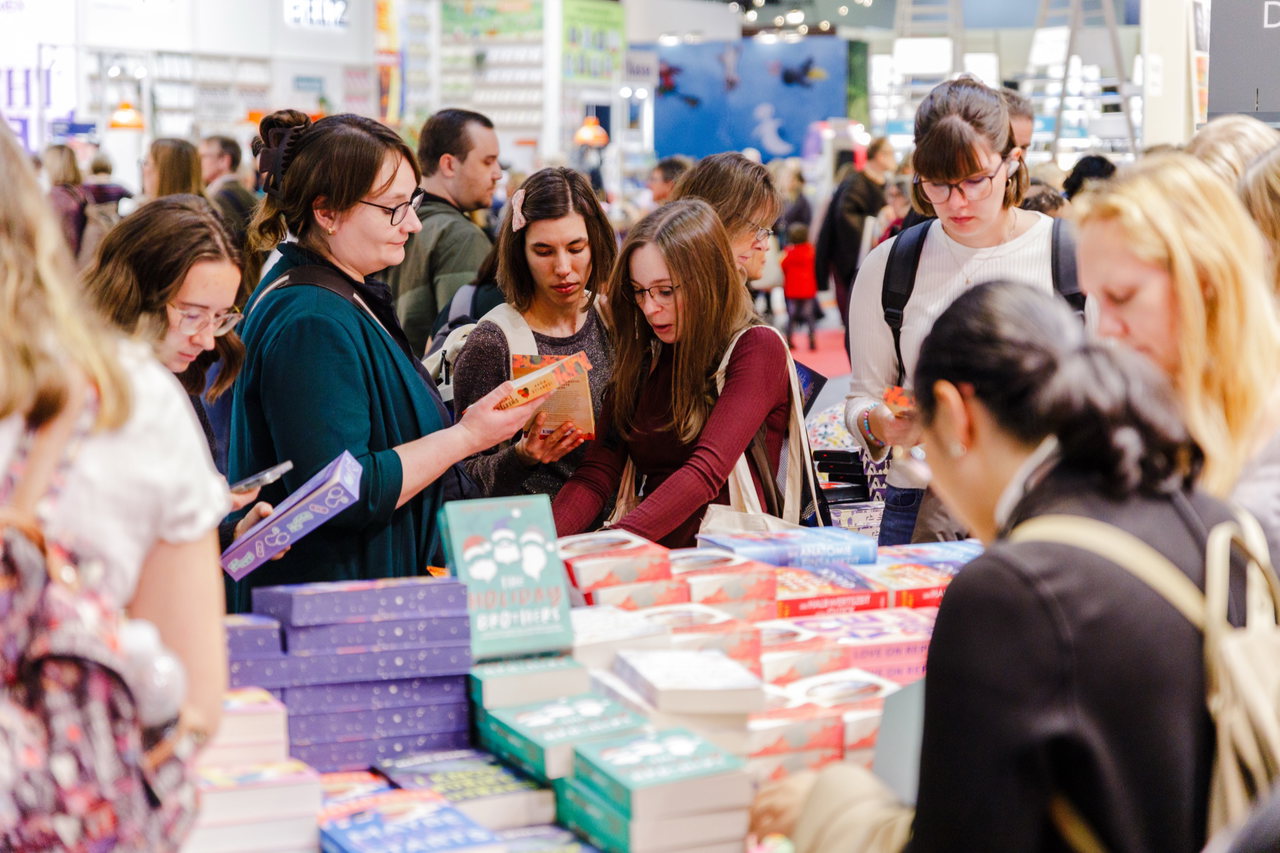
We are pleased to reprint Chapter 13 in full. "Book Fairs" runs from the co-edition boom of the 1970s, when Paul Hamlyn invited publishers to bid for language rights in a suite at the Frankfurter Hof, through the agent-driven rights mania of the 1980s and a memorably awkward audience with Claudia Schiffer, to the fair as it stands today: 500 agents' desks, 400 service providers, 200,000 visitors, half of them readers rather than professionals. Charkin's verdict on what has changed is characteristically dry. There is less drinking now, and a great deal more talk about artificial intelligence.
Reprinted from All Rights Reserved: Lessons in Publishing by Richard Charkin and Tom Campbell (Marble Hill Publishers, 2026) by kind permission of the publisher.
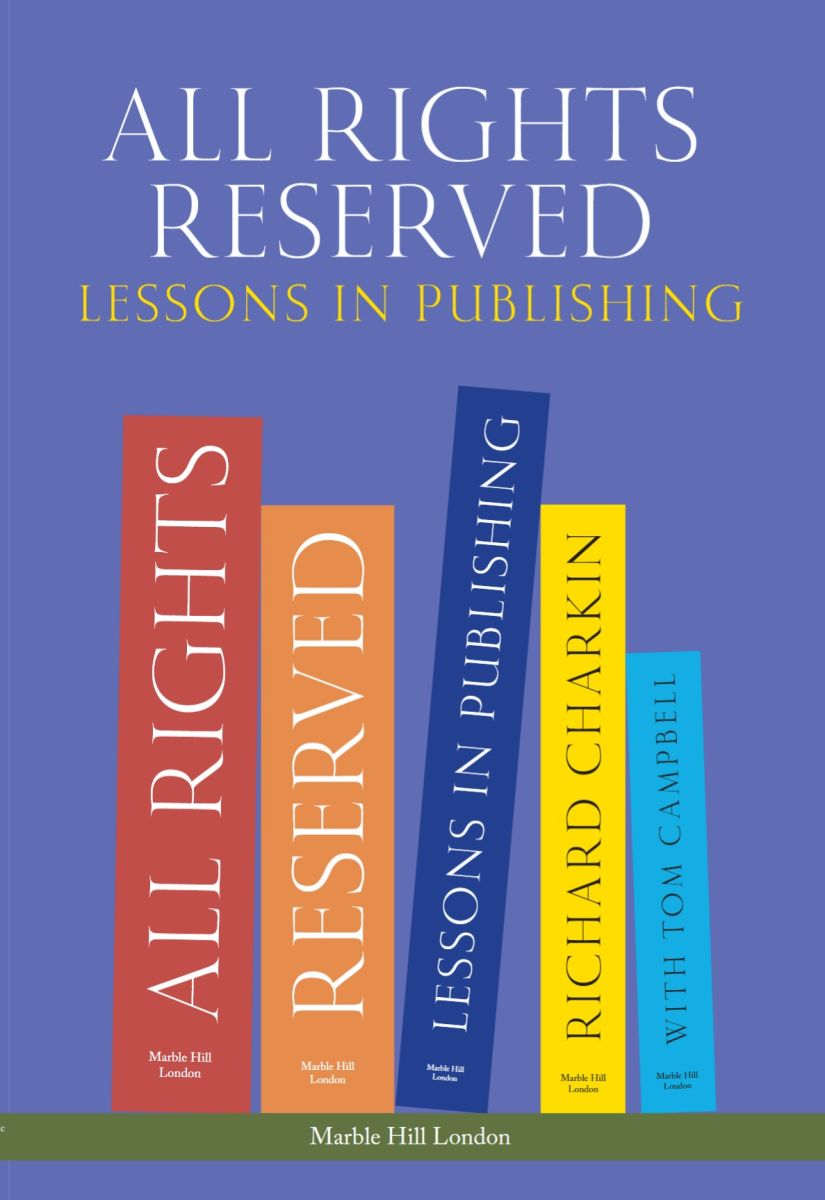
Richard Charkin, Tom Campbell: All Rights Reserved: Lessons in Publishing. Paperback. ISBN: 9781919383453, Published: 24th Sep 2026, Marble Hill Publishers. Read more
"Frankfurt is still the big kid on the block, but book fairs have proliferated"
The single biggest and most prestigious book fair in the world is what everyone in the industry simply calls Frankfurt. Contrary to what many say, it isn’t actually the oldest book fair, which is Leipzig, although it does date back as far as the 17th century. It didn’t really develop into the market leader it now is until 1949 – the year of my birth. I have attended more than fifty Frankfurt Book Fairs – missing one due to the Covid pandemic and another because I was, in theory, being educated and corporatised at the Harvard Business School. Incidentally, this is by no means near the record – the likes of George Weidenfeld or Alain Gründ managed many more.
In the 1970s the Frankfurt Book Fair prospered during the heyday of co-edition publishing. At the time, there was a plethora of deals being struck for full-colour reference and lifestyle books. Design, illustration and production costs were high and so needed very large print runs, necessitating bringing together several different language publishers. Each translation partner would produce the text for their own language, which the originating publisher would create black plates for. These black plates would be changed between publishers, while all the colour would be printed in a single run.
Paul Hamlyn was one of the leading figures in this business. He used to take a suite at the Frankfurterhof Hotel where he would invite potential partners to bid for their respective language rights. The size of these deals and the large print runs, often more than a hundred thousand spread across half a dozen languages, were highly lucrative. Not only did one make the money on the foreign rights, it also substantially brought down the unit cost (and therefore raised the margin) on the original English edition.
In the 1980s as some of the froth left the co-edition market, the hot ticket was to sell translation rights to fashionable literary fiction and celebrity memoirs, for which there was something of a mania at the time. Rather than the original publisher, however, this business became the domain of superstar literary agents who retained translation rights. These new entrepreneurs would tend to hold court in the lobby of the Hessischerhof Hotel, which was slightly less grand (and now defunct) but closer to the fair.
In the early 1990s at Frankfurt, I was summoned by one of these literary agents to meet the famous German supermodel Claudia Schiffer presumably to offer to buy the English rights to her upcoming autobiographical book. I found myself in a private room with a dozen other international publishers and we were each in turn invited to ask Claudia one question. Peter Mayer, the chief executive of Penguin, intelligently asked her what the underlying theme of the book might be. By the time it had come to me, all the sensible questions had gone. In desperation all I could think to ask was if she would identify her first lover in the book. The answer was a curt no. We did, however, eventually end up with a book of photos which did as well as such books tend to do.
Claudia Schiffer was not the only supermodel to attend Frankfurt. In 1994 Naomi Campbell had written, with a ghost writer, her debut novel entitled Swan for Heinemann, part of Reed International Books. We flew her out to Frankfurt to promote the English language edition and to help sell the translation rights. I am not sure we succeeded on either count, but several things from that year stick in my memory – including her having to change her clothes in my hotel room, while I guarded the door. We did manage to get her an interview with the literary editor from a leading English newspaper who was briefed in advance not to ask any difficult questions about the book. He followed these instructions until the very end of the interview when he asked Naomi’s opinion of magical realism, the answer to which eluded her. Unfortunately, despite our best efforts, Swan never troubled the bestseller charts.
Whether written by a model or not, at this time there would invariably be a widely acknowledged ‘book of the fair’. This could be almost anything – a prestigious literary novel or a novelty Christmas book. Publishers and agents would do their utmost to find a book to hype. It worked both ways – to stoke up the price for the seller, while the buyer could better justify their participation and their expenses.
Frankfurt is still the big kid on the block, but book fairs have proliferated. This has been helped in part by the phenomenon of ‘country guest of honour’ which is now an almost universal feature of any book fair. In this way, national governments and cultural funding bodies have become generous sponsors in an attempt to enhance their country’s image and boost exports but, more realistically, to give the frequently underemployed culture minister something to do and a stage on which to parade.
In the last fifteen years, the Gulf States and many more emerging economies have joined the party big time – initially as guests of honour at the major fairs and now hosting their own. Interestingly most of these more recent fairs are consumer rather than business facing and attract many millions of visitors who might actually pay to buy a book – not a terrible idea.
The days when Paul Hamlyn needed to be in Frankfurt in order to bring together a dozen international publishers for a co-edition have long gone. Much of this can be pulled together over email and video calls. However, that doesn’t detract from the importance of serendipitous, coincidental meetings, and late-night drinking sessions. It was at Frankfurt, for instance, while I was still at OUP in the mid-1980s that I first met Vitek Tracz, who was trying to put together co-editions of colour medical slide sets. He would later become my business partner and one of my closest friends in publishing.
Frankfurt traditionally starts on a Wednesday, and the busiest days tend to be the first two. On the Friday evening, after the more senior corporate executives have left, there are still many stands open with their owners still hungry for business. For fun, when I was at Reed Elsevier in 1994, I asked the people on our stand to allow me a $100 stipend to see if I could acquire anything for that token sum. Trawling around the half empty hall, I came across a book entitled The Sex Lives of the Rich and Famous which the publisher agreed to let me have non-US English language rights for my $100. The chapters on Mussolini and Hitler were terrific, but unfortunately much of the book was devoted to living celebrities and on my return to London, the company lawyers quashed any chance of us publishing it.
Later, I was able to do a far more upmarket deal. In the comfortable surroundings of the business lounge at the fair, I met the chief executive of a US conglomerate who had unwittingly acquired the Arden Shakespeare, one of the great literary and educational brands, as part of a much wider corporate purchase. He was suffering blowback from having sacked one of the volume editors, a highly respected Shakespeare scholar, who had missed the delivery deadline by several years. He had provoked the ire of the world of Shakespeareana and was drowning in offensive emails and threats. As a result, it was relatively easy in the ambience of Frankfurt to persuade him to sell the whole Arden series to Bloomsbury, where it has happily sat ever since, and forms a key part of the enormous digital resource Drama Online.
Despite internationalisation, the key focus for many publishers remains their domestic market and book fairs are an important way in which their horizons can be broadened. There has been a significant shift in emphasis from North America and Western Europe to Asia, the Indian sub-continent, Latin America and the Middle East. This is reflected not only in Frankfurt but in the creation and growth of new book fairs – for instance Jakarta, Beijing, Seoul, Sharjah, Guadalajara. Book fairs are a vital means in which publishers on a global basis gather and meet people from entirely different markets.
Every major fair will now have a dedicated space for literary agents. Of course, agents were always a presence at book fairs, but their numbers and visibility have hugely increased. At the most recent Frankfurt Book Fair, there were more than 500 desks for literary agents and over 400 service providers. These include printers and technology firms providing a plethora of production, marketing, software, and distribution services for the modern publisher.
Book fairs are also becoming more open to the general public. At Frankfurt in the 1970s, there would have been few international authors attending, but they now tend to be both industry gatherings and genuine literary events. At the most recent Frankfurt, there were more than 200,000 visitors of whom roughly half were industry and half private individuals. They are particularly important for working with schools and young people and inspiring the next generations of readers.
The number of book fairs increases annually, but it’s fair to say that, alongside the ones described in this chapter, London and Bologna still figure highly in every publisher’s must-attend schedule - London for rights and book sales in every genre, Bologna for its primacy in children’s books and its growing commitment to adult literature.
The book fair today is undoubtedly a more business-like environment than when I started attending in the 1970s. Reflecting changes in society and industry, there is probably less dubious behaviour and heavy drinking and rather more earnest conversations about Artificial Intelligence and diversity.
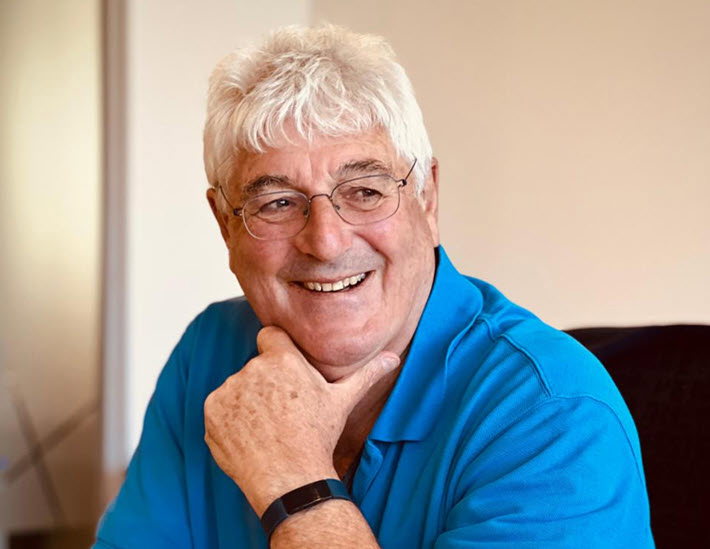
Richard Charkin is a former president of the International Publishers Association, the United Kingdom’s Publishers Association, and The Book Society. He has held many senior posts at major publishing houses, including Bloomsbury, Macmillan, Oxford University Press, Current Science Group, and Reed Elsevier. He is a former non-executive director of the Institute of Physics Publishing, Liverpool University Press, and Cricket Properties Ltd. He is currently Chair of Thames & Hudson Ltd, a board member of Bloomsbury China’s Beijing joint venture with China Youth Press, a member of the international advisory board of Frankfurter Buchmesse, and is a senior adviser to nkoda.com and Shimmr AI. He has founded his own business, Mensch Publishing. He lectures on the publishing courses at London College of Communications, City University, and University College London. Charkin has an MA in natural sciences from Trinity College, Cambridge; was a supernumerary fellow of Green College, Oxford; attended the Advanced Management Program at Harvard Business School; and is a visiting professor at the University of the Arts London. He is the author, with Tom Campbell, of ‘My Back Pages; An Undeniably Personal History of Publishing 1972-2022.’ In the June 2024 King's Birthday Honors, Charkin was made an officer of the Order of the British Empire, OBE, for his "services to publishing and literature."