After the dragon, now the NEINhorn
German children's book publisher Carlsen is suing OpenAI. The context — and what it means for publishers.
Within five months, a second major German children's book publisher has taken OpenAI to the Munich Regional Court I. The allegations in both cases are almost identical, and they target a question no court has yet answered: is an AI provider liable when its system offers, unprompted, a complete commercialisation package for someone else's work?
Published: 19.8.2026 | Foto / Video: Carlsen
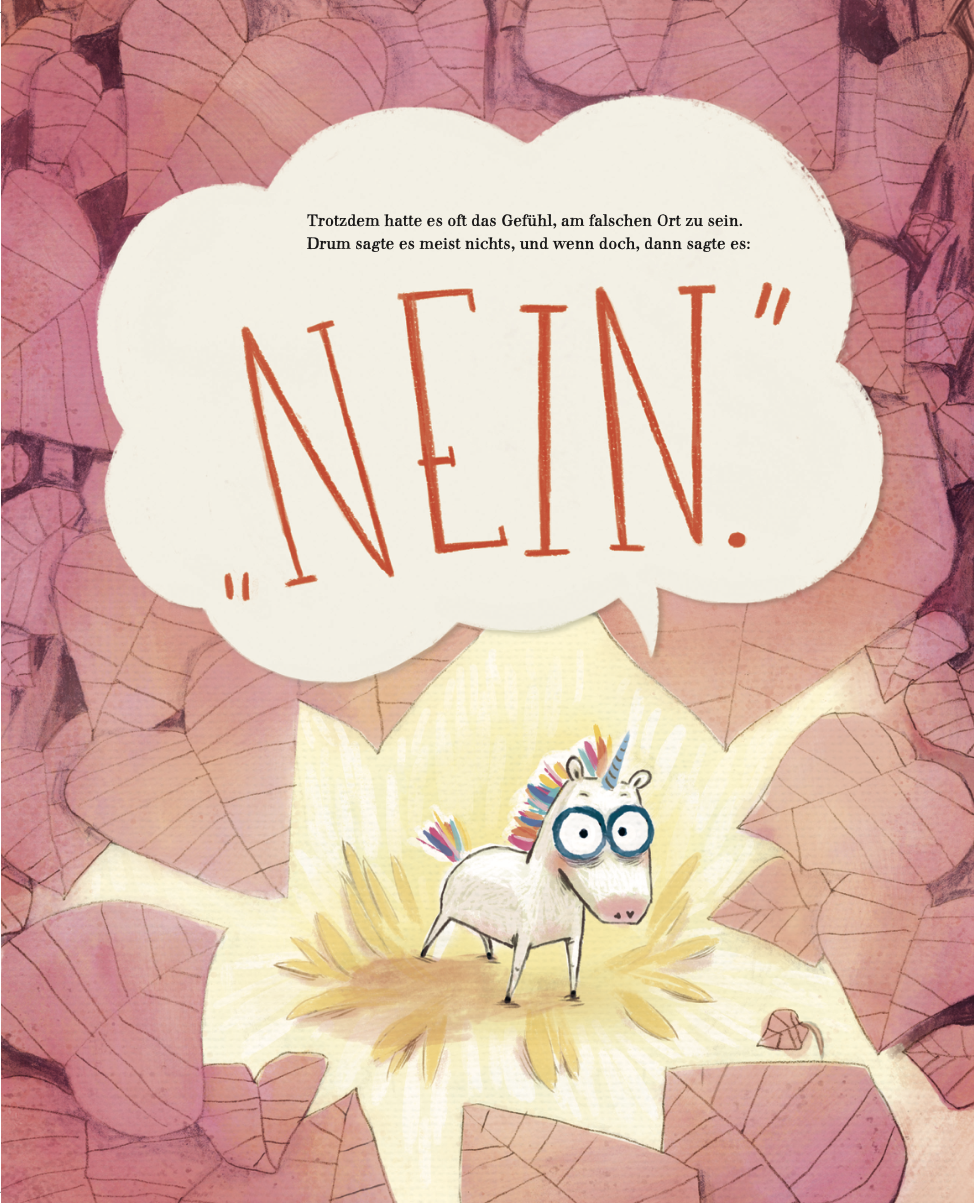
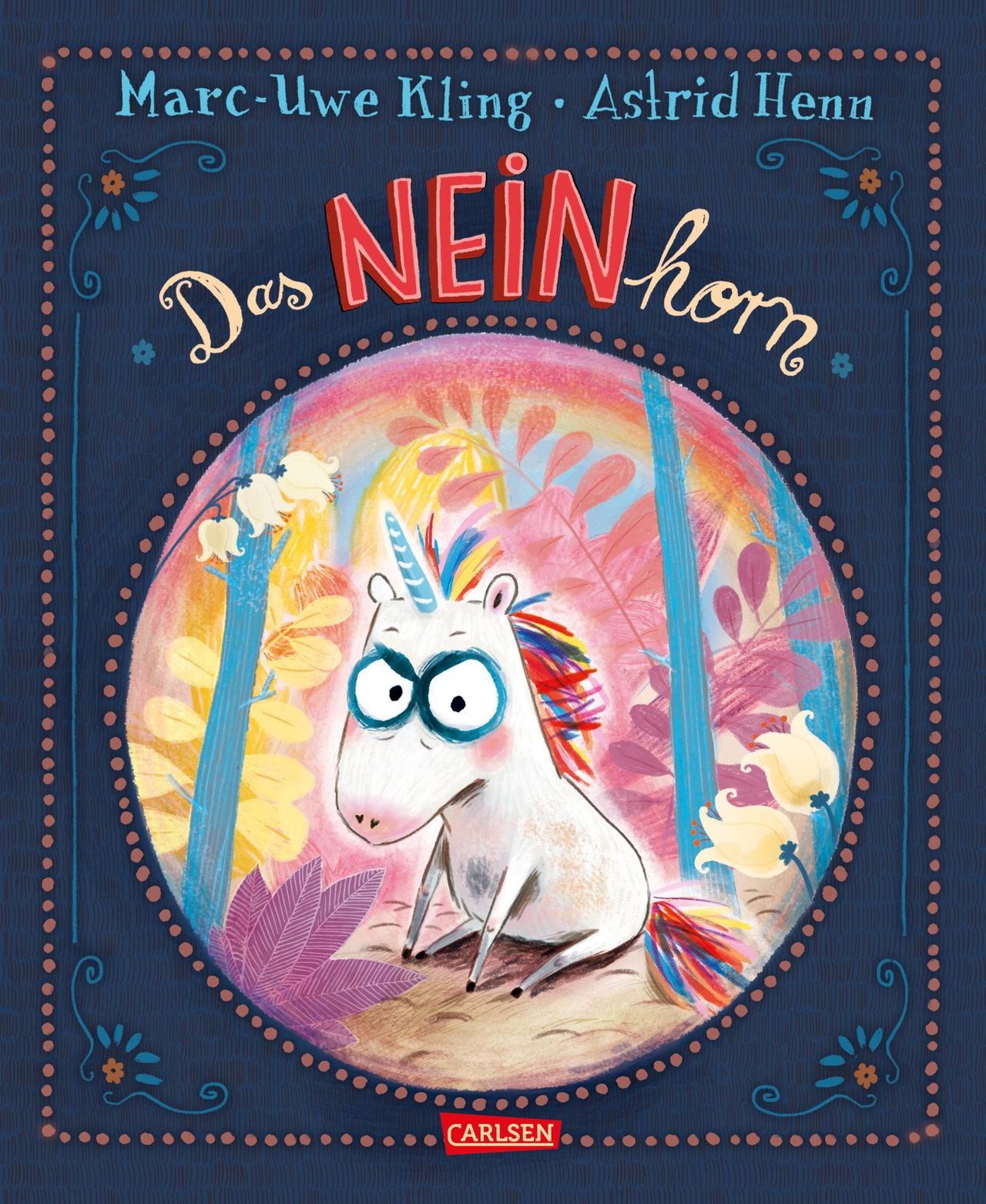
On 19 August 2026, Carlsen Verlag, author Marc-Uwe Kling and illustrator Astrid Henn filed suit against OpenAI Ireland Ltd., the entity operating ChatGPT in Europe. The Hamburg publisher is backed by its parent, the German Bonnier group. At issue is Das NEINhorn, published by Carlsen in 2019 and, in the publisher's description, one of Germany's most successful picture book series.
The allegation: memorisation plus a marketing package
Carlsen builds its case on test outputs. According to the publisher, the simplest prompts are enough for ChatGPT to generate NEINhorn stories matching the protected work in its essential creative elements, with illustrations barely distinguishable from the originals. The chatbot then volunteers further text and images unasked, drawing on secondary characters and settings that never appeared in the prompt.
The furthest-reaching allegation concerns commercialisation: ChatGPT is said to offer complete print-ready templates — cover design, imprint page, an apparently invented ISBN and the publisher's logo included. From the fidelity of these copies, Carlsen infers that the originals were used unlawfully to train the text and image models and are now held in them as "memorisation," retrievable at any time.
Christian Schumacher-Gebler, CEO of the German Bonnier group, highlights the detail that makes the case vivid: the generated imprint page credits Kling for the text, Henn for the illustrations and Carlsen Verlag GmbH for the copyright. The system attributes the rights correctly — and produces the work regardless.
The suit seeks an injunction against unlicensed use, disclosure, and compensation for damages already incurred. Kling puts it sharply: anyone who illegally downloads a single film or book faces a severe penalty, while OpenAI helps itself to the world's art and culture and expects to get away with it.
A familiar pattern
The case closely resembles the suit Penguin Random House filed at the same court in March 2026 over Ingo Siegner's Der kleine Drache Kokosnuss: recognisable reproduction from simple prompts, confusingly similar illustrations of the main character, and unsolicited offers of a print-ready manuscript with cover, blurb and upload instructions for self-publishing platforms.
Two differences stand out. Publisher, author and illustrator are suing jointly. And the faked ISBN and publisher logo may push the case beyond copyright into trademark and unfair competition territory — false or missing attribution, as lawyer Sabine Richly noted on the Kokosnuss case for dpr, is also consumer deception and exploitation of a third party's protected work.
The open liability question
What is legally novel is less the memorisation than the system's own initiative. Providers stipulate in their terms of use that users must not infringe third-party rights; whether such clauses limit the provider's own responsibility is a separate question.
"The system becomes active by itself and expands the potential damage on its own initiative," says Richly. "That should make a clear difference to the liability question." Whether OpenAI is liable as principal or accessory to commercial-scale infringement when its system delivers an entire business model unasked has not been decided.
The legal groundwork
The court's 42nd Civil Chamber has form here. In November 2025 it largely upheld GEMA's claims against OpenAI for injunctive relief, disclosure and damages (42 O 14139/24), treating memorisation in the model parameters as a copyright-relevant reproduction. A ruling against the music generator Suno followed in July 2026 (42 O 763/25). Both are first-instance decisions; OpenAI has appealed the GEMA ruling to the Munich Higher Regional Court.
Importantly, the GEMA ruling makes no general statement on the permissibility of AI training. Its reasoning centres on memorisation — which would have to be established separately for each work and each model. That is why Carlsen and Penguin Random House anchor their claims in specific works and documented outputs.
The international picture
The German cases are part of a fast-growing wave of litigation. In March 2026, Encyclopaedia Britannica and Merriam-Webster sued OpenAI in federal court in Manhattan over the alleged use of nearly 100,000 articles as training material and the diversion of traffic from their sites; at the time of filing, US tallies counted almost 100 copyright suits against AI companies. An MDL proceeding at the same court bundles more than a dozen publisher and media claims. The financial benchmark was set by Anthropic's court-approved $1.5 billion settlement with authors. OpenAI maintains its models are trained on publicly available data and covered by fair use.
The bind remains
Bertelsmann announced a partnership with OpenAI in January 2025 and uses the technology across several divisions — while its subsidiary Penguin Random House sues the same provider. Bonnier makes the tension explicit: its houses use AI software, Schumacher-Gebler says, but that does not mean looking away when providers massively infringe the rights of creators and publishers. Whether licensing deals on one side undermine claims on the other depends on the specific contract, says Richly; her working assumption is that no company would sue over uses it had already licensed.
What this means for publishers
For houses that neither want to nor can litigate, the advice is unchanged: waiting is not an option.
Secure the technical side
Anything published online should carry a machine-readable opt-out declaration where AI training is not wanted. The standards are unsettled, but the available tools are a necessary first step.
Preserve evidence
Documented outputs are central to both cases. Record prompts, responses, images and timestamps systematically before model versions change.
Apply political pressure
Opt-outs get circumvented and enforcement is costly, which makes the route via German and European legislators part of the answer.
The German Börsenverein, a trade association and a cultural organisation, backs this line: there is too little transparency about training data, argues CEO Peter Kraus vom Cleff, and the courts must clarify where impermissible appropriation begins.
Where the media and AI firms go head-to-head
Pending and recent litigation by publishers against AI companies | Overview and status: 20 August 2026