The web has a history — and it rewrote literature
In "We the Platform", Duke scholar Aarthi Vadde argues that Web 2.0 did not kill the literary star
For most of us, the web has no history. It is simply there — in our working hours, our reading habits, our sense of what a text is and who gets to write one. Aarthi Vadde, associate professor of English at Duke University, spent the last decade making that invisible infrastructure visible, and the result is a book that publishers should read closely.

Published: 18.8.2026 | photo / video: AI generated, Magnific
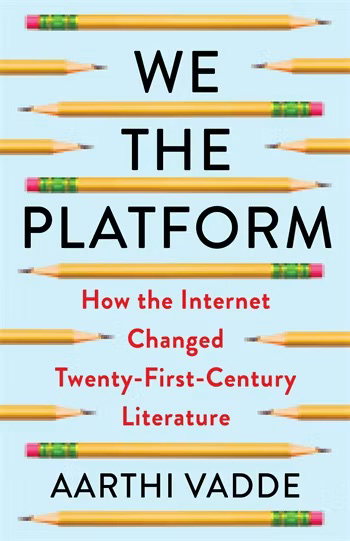
"We the Platform" argues that the transformation of literature in the twenty-first century is best understood through Web 2.0: the movement that redefined the internet as a platform for sharing user data, content and expression. Vadde traces what followed — Instapoetry and fan fiction, Amazon's "underlist" of commercially unpopular books, Wattpad's conversion of writing communities into audience insights sold to Netflix — not as a story of literature's decline, but as a complex convergence between mass and literary writing. Along the way she makes a claim with consequences for anyone in the book business: the era of mass reading has given way to an era of mass writing, in which value increasingly resides in the doing of it rather than in the careful reading of it.
We publish the opening pages of the book by kind permission of the publisher.
“I never thought of the web as having a history.”
“I never thought of the web as having a history.” A smart scholar of modernist literature once told me this at a conference. The comment stayed with me because I would have said the same thing until I started researching this book. As with many people, the web is baked into my everyday life. It is part of my daily rhythms. It has conditioned how I work for as long as I can remember, but it only became the object of my work in the last decade. As with so many infrastructural technologies, from electric lights to gas-powered heating, most people only notice the web as a technical apparatus when it fails. Sheila Heti knows this, but she also knows how hard it is to pinpoint when the web became the dominant cultural apparatus of middle-class North American life. My epigraph, taken from her novel Pure Colour, is proleptic, meaning it jumps into the future from a point in the past. In skipping over the present, Heti captures the sensation of the overlooked moment when suddenly “everybody” had a smartphone. People on the streets were looking down instead of up, and “they,” students at an Edenic, highly selective, but somewhat parodic institution called the American Academy of American Critics, could not know how this new way of being would change their future trajectories as professional critics of art, literature, and culture. The students, or the elect as Heti calls them, did not expect to be cast out of Eden into a world of charismatic lay people shaped by endless streams of images and words. They, the elect, thought the competition for authority and influence was over before it had begun.
Why "publishers versus platforms" is wrong
Heti’s fable of critical ambition sets up an opposition between institutional cultivation and technological democratization that We the Platform explores and sometimes turns on its head. Institutions versus technologies, publishers versus platforms, them versus us: It is easier to see the antagonisms than the entanglements. But the truth is that institutions deploy technologies; publishers partner with social media platforms; the crowds of people posting selfies on Instagram contain within them serious writers promoting their (or should I say our) books. The shift from “they” to “we” was part of the original rhetorical architecture of Web 2.0, a social and technological movement that rebranded the web as social and used the vocabulary of democracy and participatory culture to imbue writing on the web with a sense of empowerment, representation, and freedom from other people’s authority.
Few internet users believe those promises today, but we are still locked into a Web 2.0–driven internet culture that thrives on our information and creative expression and whose Faustian bargains we continue to accept. There are approximately eight billion people on planet Earth. Three billion of them/us are active monthly users on Facebook. Despite public backlash against social media platforms and Big Tech companies, products built on user data, dubious privacy practices, and the general lack of guardrails continue to thrive. A case in point: In January 2023, ChatGPT broke the record for the fastest-growing app in the history of the internet. It boasted 100 million active users within two months of its release. As with previous “free services,” ChatGPT trains on the data of its users. Unlike in 2010, many web users now know that if you are not paying for the product, you are the product. Yet the tradeoff of privacy for convenience, quick access to information, and online reach continues to have wide appeal. Even for those who would try to extricate themselves, the tentacular reach of Web 2.0 companies like Google and Meta makes it very difficult to escape digital surveillance without dedicating intensive energy and knowhow to changing default settings, disabling location tracking, blocking cookies, acquiring a VPN, and so on.
Excerpted from We the Platform: How the Internet Changed Twenty-First-Century Literature by Aarthi Vadde. Copyright (c) 2026 Columbia University Press. Used by arrangement with the Publisher. All rights reserved.
A story of complex convergence between mass and literary forms of writing
Over the last twenty years, the democratic impulses animating the birth of the web have been yoked to undemocratic principles of enclosure as Web 2.0 companies have sought to extract value from the reading, writing, and sharing of ordinary people. Social media platforms, in size, scale, and idiom, may seem to represent everything that literature and literary criticism is not. Yet this book tells a story of complex convergence between mass and literary forms of writing in the period during which Big Tech consolidated its power and influence. Web 2.0 has changed the playing field of literature by privileging new modes of literacy, publication, distribution, and celebrity. Established authors such as Margaret Atwood, Salman Rushdie, Joyce Carol Oates, and William Gibson have amplified their book-based celebrity through direct interaction with current and potential readers on platforms like Twitter (now X) and Reddit. Others, for example Teju Cole, Jennifer Egan, and David Mitchell, have tested the capacities of social media for serial fiction and incorporated their findings into their more traditional print-based novels. The once aspiring, now midcareer authors Patricia Lockwood, Tao Lin, and Megan Boyle cultivated readerships by writing creatively and absurdly about the internet on the internet. Lauren Oyler, who began her career as a freelance writer in a primarily digital publication ecology, achieved literary success by lampooning the migration of such internet-based writing styles into the form of contemporary novels. The esteemed genre fiction writers Naomi Alderman and N. K. Jemisin have discussed the importance of reading and writing online fan fiction to their development as writers, thinkers, and artists who, in turn, wish to mentor the next generation of writers, thinkers, and artists.
Outside this sample of writers working within the core of the contemporary literary field is an even vaster world of popular and self-published literature. We have all heard of Rupi Kaur. Her self-published poetry collection Milk and Honey landed on the New York Times bestseller list in 2014, where it stayed for two and half years. Kaur has become of the face of Instapoetry, a term that could refer neutrally and descriptively to poetry self-published on Instagram by Kaur, Lang Leav, Yrsa Daley-Ward, and others but in practice functions more like a catchall dismissal for poetry popular with nonpoetry people. E. L. James’s Fifty Shades of Grey, which began as Twilight fan fiction on the website FanFiction.net and featured an English major as its protagonist, achieved a similar degree of notoriety among critics assured in equal measure of its cultural significance and aesthetic insignificance.
More bewildering than commercially popular literature, though, is the proliferation of commercially unpopular literature made possible by the low overhead costs of digital publishing. Mark McGurl, in his extensive study of Amazon’s Kindle Direct Publishing ecology, marvels at the “underlist, a vast ocean of inert literary content stored on the server at marginal cost” to Amazon—one of advantages of being a “platform rather than a publisher” in the received sense of a literary publishing house or even a giant publishing conglomerate. Beyond the self-publishing ecology of Amazon lie social authorship platforms like Wattpad and Inkitt, which host a mix of fan fiction and original fiction by writers seeking community, not revenue. Such sites cultivate mass creative writing with one eye toward brokering the careers of a small sliver of users and the other, more dominant eye toward transforming the behaviors and responses of their user bases into lucrative “audience insights” to be sold to advertisers and companies like Netflix and Hulu.
Instapoetry, fan fiction, the Amazon Kindle ecology, and Wattpad reflect a new kind of written abundance and computational surveillance surrounding literature. Such abundance could simply be taken to reaffirm the distinction between writing marked by groundbreaking skill (literary value), writing marked by groundbreaking sales (commercial value), and writing marked by groundbreaking scale (informatic value). This appraisal, however, fails to account for the sea change in literacy practices and publishing strategies that have shaped new institutions of authorship, like Creative Commons, new literary forms from Twitter fiction to asemic writing, and new conceptions of the craft of literary writing in an overflowing media ecology that includes generative AI.
The „massification“ of literacy
Precisely because social media platforms are not the usual suspects of literary history, they lend insight into the ongoing formation of literariness in the twenty-first century. The social, economic, and technological arrangements of a web-based system of literature are fundamentally different from the print-based system in which our modern conception of literature was born. John Guillory reminds us that a vernacular literary culture emerged in the eighteenth century as a “historically bounded set of systemic relations constituting the practices and institutions of reading, writing, and speaking.” This system, following a Euro-American timeline, peaked in the nineteenth century and contracted in the twentieth. Its “enabling condition was the massification of literacy, the extension of reading practices to large numbers of the populace.” The growth of reading, particularly for mass entertainment, created the conditions for a flourishing literary marketplace in the nineteenth century, but Guillory’s reduction of mass literacy to reading practices leaves the proverbial coin unflipped.
What about the extension of writing practices to a large proportion of the populace in the twentieth and twenty-first centuries? Deborah Brandt is helpful here. She traces the massification of writing in the context of the United States to the growth of knowledge work, which rose from 10 percent of the employed population at the turn of the twentieth century to 30 percent in 1959, 50 percent in 1970, and 75 percent in 2000. Knowledge work depersonalizes and instrumentalizes writing for the vast majority of people who do it. Attending to the testimonies of white-collar workers, hobbyist writers, and aspiring authors leads Brandt back to considering the different cultural heritages of reading and writing in the United States. Whereas reading skills were historically sponsored by church and state as a way of cultivating moral citizens, writing has “always been less for good than it is a good.” The labor and commodification of writing tie it to the world of work, transactional politics, and patronage—real-world conditions that exerted control over writing and extracted surplus value from it. As Brandt notes, for most of
the history of mass literacy, the value of writing has resided in the reading of it, not the doing of it. Authorship gains its prestige from its power to morally uplift a civic readership . . . at least until now, the potentials (and pitfalls) of mass writing as a grounds for democracy have been stifled within the ideological arrangements of a reading literacy—not only in the nation’s educational mission but more broadly in the culture.
“We the people” has become “We the platform”
The study of literature, for obvious reasons, is rooted in teaching students how to read in increasingly sophisticated ways, but literary experts are facing a broad paradigm shift in which the value of mass writing resides more in the doing of it and the clicking of it than in the careful reading of it.
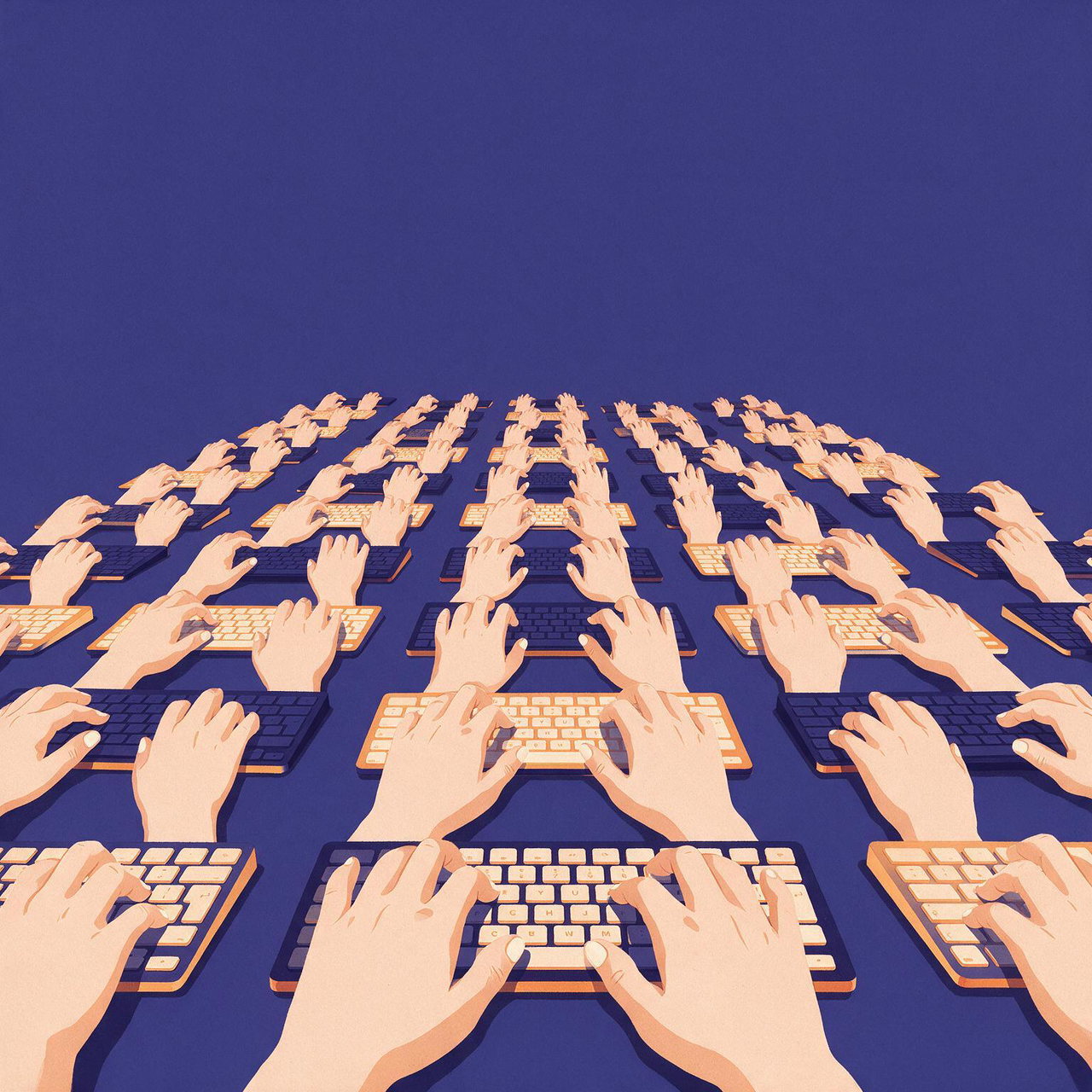
Platforms need user-generated content to survive. They profit from writing in words, images, gifs, videos, and remixes of all the above. As more people subordinate reading time to writing tasks and as more young people subordinate reading to writing in their hobbyist endeavors, the rise of a writing-first literacy becomes essential to theorize. Responding to Nicholas Carr’s The Shallows: What the Internet Is Doing to Our Brains, Brandt asks whether his definition of “deep reading” and its decline in the digital age was a holdover of the institutional arrangements and assumptions of a print-centered culture in which readers greatly outnumbered writers. She posits that the twenty-first century has become the era of “deep writing,” in which more people than ever “have keyboards under their hands,” immerse themselves in interactive networks, and look to screens to “shine back at them the public look of their own written utterances.”
“We the people” has become “We the platform” under Web 2.0, and an upending of literacy ideologies and collective identities has followed. The “we” of “we the people” was always a unifying and celebratory abstraction—a promise of civic national identity founded on common principles and undermined by institutions like slavery. The “we” of “we the platform,” as I intend it, is a more agonistic than aspirational we. It names the contributions that anyone who posts on social media makes to the overall vitality of the platform, but it also acknowledges the involuntariness of online life. Conscription into digital communications systems, data collection, and monitoring is now the norm even for those people who have no social media accounts and tune out online discourse. If we use email, Google, or WhatsApp, we have a trackable presence across platforms.
The rise of mass writing connects a host of anxieties about the future of literary study in the academy to pressing fears about the future of human expression and expertise beyond it. In his book Professing Criticism, Guillory maps the evolution of literary criticism as a university discipline alongside the emergence and consolidation of the professions. He reads contemporary tendencies within the discipline, from a taste for politically progressive interpretation to postcritique, a method he associates with the “idealization of the ‘amateur’ reader,” as symptomatic of a legitimation crisis in which literature professors must confront our own decline in social prominence and, even more worryingly, the displacement of literature “as the premier medium of entertainment and edification.” Call us cousins to Heti’s down-on-their-luck graduates of the American Academy of American Critics.
Today’s transformed cultural field is best understood through Web 2.0
While academic literary professionals were gazing longingly at the amateur reader, amateur writers were popping up all over the web and sharing opinions, blogs, poems, stories, and reviews. As Guillory notes of his college students, though without any mention of the internet, Instapoetry, or slam poetry, “poetry is becoming for many readers something different from literature, a mode of verbal expression that is conspicuous for its nonacademic social venues.” To understand how poetry becomes something distinct from literature, we need to understand how Instapoetry interacts with the poetry establishment; the same goes for the interactions between fan fiction and literary fiction, social media platforms and traditional literary publishers. To situate “aliterary study and literature itself in a transformed cultural field,” as Guillory names the project of literary study today, we must first delineate that field.
In We the Platform, I argue that today’s transformed cultural field is best understood through Web 2.0, the movement to redefine the World Wide Web as a platform for sharing user data, content, and expression. Although Guillory’s own historicization of the concept of literature spans centuries, I take up the work of historicizing literariness by delimiting the scope of my account to the first quarter of the twenty-first century. This is a period that he stops short of addressing but a crucial one in which a certain conception of literature as legacy media gains traction among software and web developers. The architects of Web 2.0 treated literature as a particularly venerable if, at times, disposable form of print-based media against which to define new digital arts and literacies. The immense success of Web 2.0 as a sociotechnical formation required players in the literary field—authors, publishers, readers, scholars, and critics—to adapt their own conceptions of literature in return. Web 2.0 thus becomes the key framework for thinking about how the meanings, uses, and symbolic values of literature have changed in the last twenty-five years, a time that is quite difficult to historicize given that it is our own time and, as a result, almost invisible as a period.
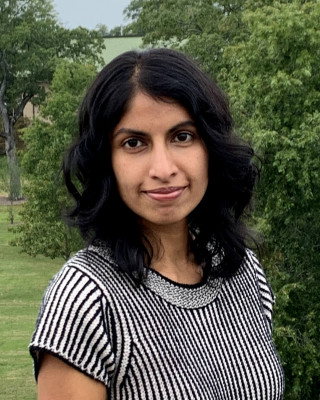
Aarthi Vadde is E. Blake Byrne Associate Professor of English at Duke University. She is the author of Chimeras of Form: Modernist Internationalism Beyond Europe, 1914–2016 (Columbia, 2016) and coeditor of The Norton Anthology of English Literature, volume F: The Twentieth and Twenty-First Centuries (2024), among other books. She is the president of the Society for Novel Studies (2025–27) and cofounder of its podcast Novel Dialogue.