Inside one of the most ambitious audio production ever: Audible's latest Harry Potter series
A symphony of spells
Enchanted ceilings, whispered spells, bustling common rooms, and shifting landscapes rendered in rich spatial detail – these are some of the ingredients of a recent Pottermore/Audible production of the seven Harry Potter volumes in audiobook format. They come along with roughly 200 human speakers playing the different roles and even following the protagonists’ age grades.
There are quite a number of other things making this production special, whose volume 1 is already available to the listener.
Video: Audible, Youtube
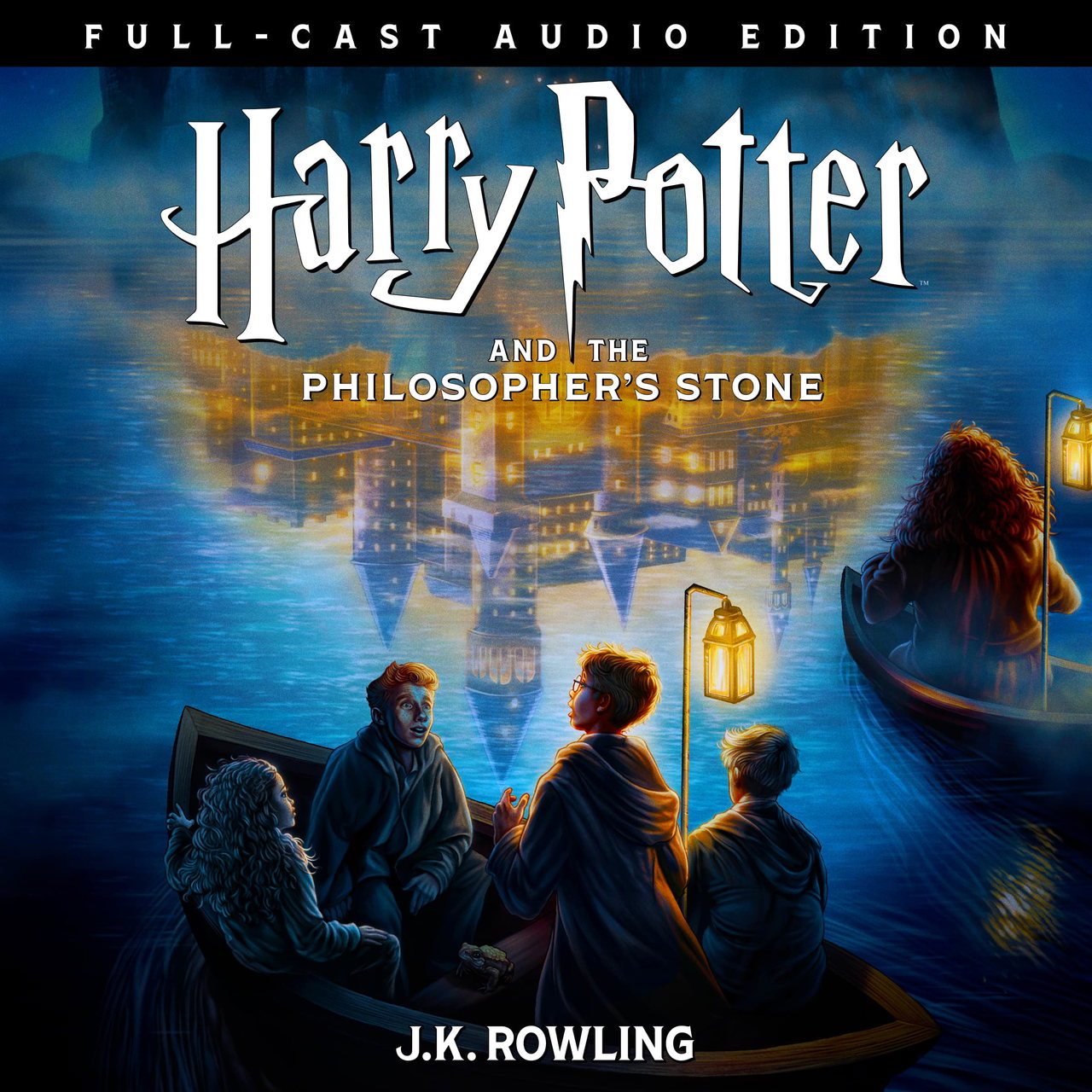
When Pottermore Publishing and Audible, Inc. jointly announced Harry Potter: The Full-Cast Audio Editions, the companies positioned the project as one of the most ambitious undertakings in the modern history of audiobook production. Over 3000 hours of recorded material, a Dolby Atmos soundscape, original compositions, and extensive real-world foley converge into a single creative objective: to reinterpret J.K. Rowling’s seven-book series for a new generation of listeners while enriching the experience for long-time fans.
An ensemble cast of more than 200 performers
The initiative brings together two central actors in the digital reading and listening ecosystem. Pottermore Publishing, the global digital publisher of the Harry Potter books, oversees the stewardship of the intellectual property across ebooks and audiobooks. Audible provides the production infrastructure, distribution capacities, and established listener base needed to support a project of this magnitude, with the International Audible Content and Production Team holding the reins.
At the core of this reinterpretation lies an ensemble cast of more than 200 performers, spanning award-winning actors, screen and stage talents, and emerging voices:
Hugh Laurie assumes the role of Professor Albus Dumbledore.
Matthew Macfadyen voices Lord Voldemort.
Riz Ahmed interprets Professor Severus Snape, while
Michelle Gomez brings her sharp, quicksilver tone to Professor Minerva McGonagall.
Narration is led by Cush Jumbo.
Additional high-profile cast members lend further weight:
Kit Harington plays the flamboyant Gilderoy Lockhart,
Keira Knightley takes on the role of Dolores Umbridge, and
Iwan Rheon appears as Remus Lupin.
Ruth Wilson voices Bellatrix Lestrange,
Ambika Mod portrays Nymphadora Tonks,
Leo Woodall interprets Bill Weasley,
Simon Pegg plays Arthur Weasley,
James McAvoy appears as Mad-Eye Moody,
Gemma Whelan voices Professor Sprout, and
Matt Berry brings his unmistakable delivery to the role of Sir Cadogan.
A production philosophy shaped by immersive audio
This creative overhaul relies not only on performance, but also on a production philosophy shaped by immersive audio. These editions are deliberately cinematic. They are designed with Dolby Atmos spatial audio at their core, blending real-world foley with original musical compositions to create a three-dimensional sound environment. Any stereo headset is able to render this sound, and no special equipment is required for it. The production team aims to allow listeners to perceive the geography and motion of the wizarding world—enchanted ceilings, whispered spells, bustling common rooms, and shifting landscapes rendered in spatial detail.
Dolby Atmos, initially developed for theatrical sound and later expanded into home entertainment and music, is now extending its transformative potential into audiobooks. More than 1500 studios support the format, and over four billion consumer devices can play Atmos content, enabling global-scale adoption. Previous audio productions—such as immersive editions of “1984” and “Pride and Prejudice”—have demonstrated the format’s creative potential. However, the Harry Potter full-cast project places Atmos at the center of a franchise of unprecedented scale and global resonance.
Producing a fully immersive sound environment requires a complex workflow. The best outcomes emerge when original session files exist, enabling engineers to place individual sound elements independently in the three-dimensional space. When only a final mix is available, spatialization becomes more constrained. Sound editorial, not recording, becomes the most resource-intensive stage of the process, as designers must sculpt atmosphere, motion, and perspective to guide listener attention without overwhelming the narrative itself.
Audible and Pottermore frame the endeavor not simply as a creative challenge, but as a strategic alignment with what they describe as an ongoing “creative and commercial revolution” in audio storytelling.
Many of the roughly 400 recording sessions were carried out with the complete respective line-ups of the voice actors, some of whom wielded magic wands to get their bodies moving and thus give their expressions more credibility. The production team comprised about 35 different specialists, largely operating in the Audible Studios in London. At the Air Studios, London, a 60-head orchestra rendered the score composed by Nitin Sawhney. The music was blended, amongst other sources, with recordings of out-of-studio sounds of a steam locomotive or the din produced by a school class.
A growing global appetite
“Harry Potter and the Philosopher’s Stone” premiered on Audible on 4 November 2025, followed by a monthly release cadence:
Chamber of Secrets on 16 December 2025,
Prisoner of Azkaban on 13 January 2026,
Goblet of Fire on 10 February 2026,
Order of the Phoenix on 10 March 2026,
Half-Blood Prince on 14 April 2026, and finally
Deathly Hallows on 12 May 2026.
The length of the whole production is expected to surpass 130 hours.
As of mid-November 2025, prices are competitive, and the new item is subject to moves aiming at a deeper market penetration. German-language listeners will have to wait well into 2026; an official release date for part one is not available, as of mid-November 2025.
Despite the scale of this new full-cast edition, the companies emphasize continuity rather than replacement. The classic solo narrations—Jim Dale’s performances for the U. S. market and Stephen Fry’s for the U.K. and international audience, Rufus Beck’s German-language rendering—remain available. These earlier editions have collectively accumulated more than 1.8 billion hours of listening on Audible since 2015.
The new full-cast production is therefore positioned not as a successor, but as a complementary experience: an alternative soundscape that extends the franchise’s reach and offers listeners a richer set of choices.
Solidifying a role in premium audio storytelling
From a strategic perspective, the production serves multiple purposes. Audible, originally a pure distribution platform, is now itself one of the major producers of audiobooks. Audible Germany alone issues around 150 original productions per year, from lavishly produced fiction series to podcasts and documentation. The list of available titles is in the four-figure range. From that point of view, the new Harry Potter series reinforces Audible’s portfolio of Originals. Furthermore, it bolsters its collaborations with major publishers and solidifies its role in premium audio storytelling.
For Pottermore Publishing, the editions represent a major evolution in the presentation of Harry Potter in digital formats—a re-imagination that both preserves the legacy of the text and invites a new generation of fans who increasingly encounter stories through audio-first channels.
Both companies frame the effort as a commitment to innovation in the audiobook market—a bid to expand the boundaries of what listeners can expect from narrative audio and to differentiate premium productions in an increasingly crowded landscape.